I keep a notebook called The Garage Log, and its first entry is not a test result. It is a date: a Tuesday in February, 3:07 AM, the night someone pried open the side door of my Seattle garage and walked out with two bikes, a toolbox, and my late father's camping gear. The camera I had bought a week earlier from a deals email recorded 22 minutes of a blurry raccoon and one dark shape that never once became a face. The detective was polite about it. "No face, no case." The insurance adjuster watched the raccoon too, and denied most of the claim.
That night is why this site exists, and it is the filter I run every wireless security camera system through now. Not "does it record," because everything records. The harder questions: will it hand me a face at 20 feet after dark, does it stay quiet when a raccoon crosses the driveway, where does the footage physically live, and what does the whole thing cost by year three?
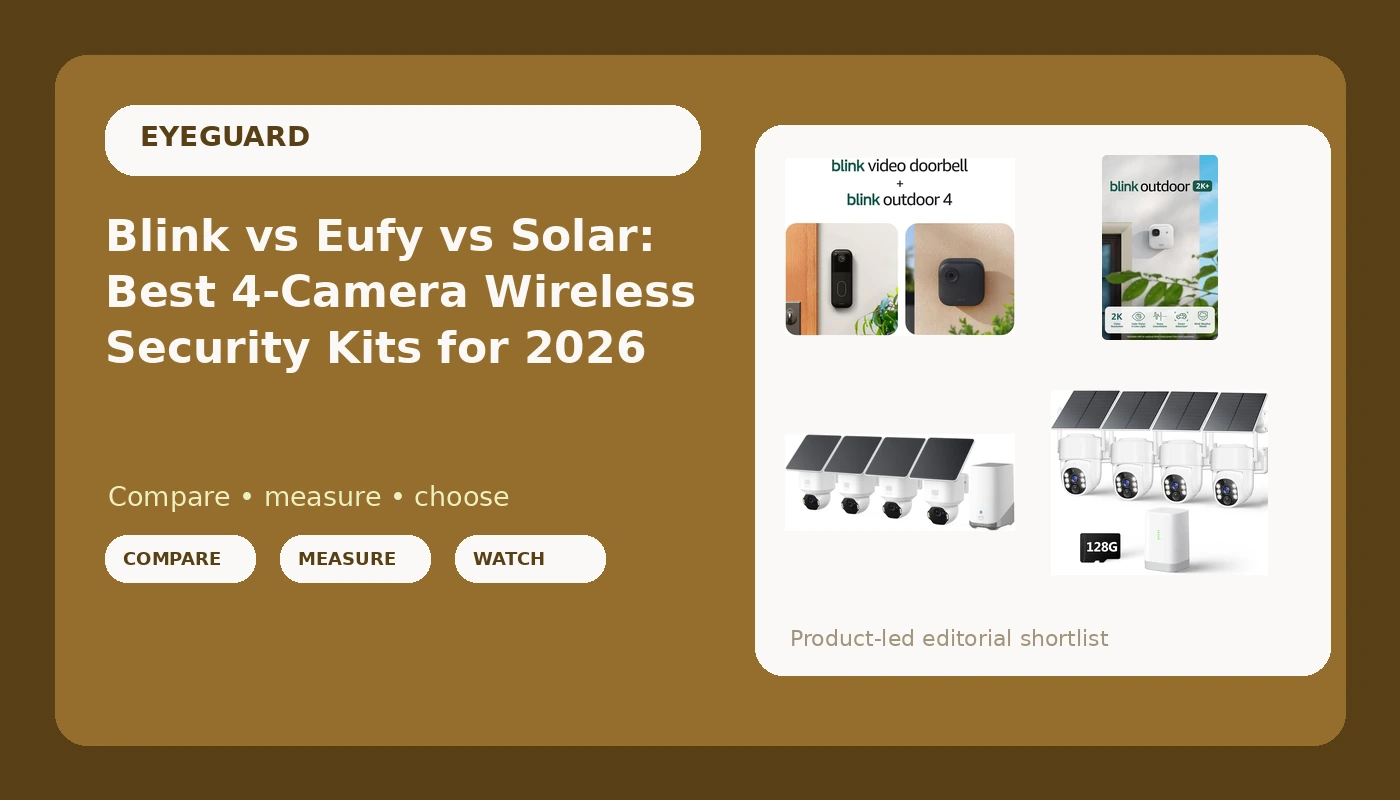
The four kits below land in the same Amazon search results and get bought for completely different reasons. One is a doorbell bundle. One is a five-camera battery system. Two are solar kits with local storage and no required subscription. They are not interchangeable, and the price gap between them is not the interesting part.
Related: Night Vision Cameras: What Actually Works After Dark
For most homes, the eufy Security SoloCam E42 4-cam kit is the pick, because 4K resolution, solar power, and genuinely optional cloud storage is the combination that survives contact with a police report. The Blink systems win on ecosystem and setup speed. The 4MP solar kit wins on storage per dollar. Which one belongs on your house comes down to three things: how far your driveway sits from the street, whether you are willing to pay a monthly fee, and how much you hate changing batteries.
The comparison table
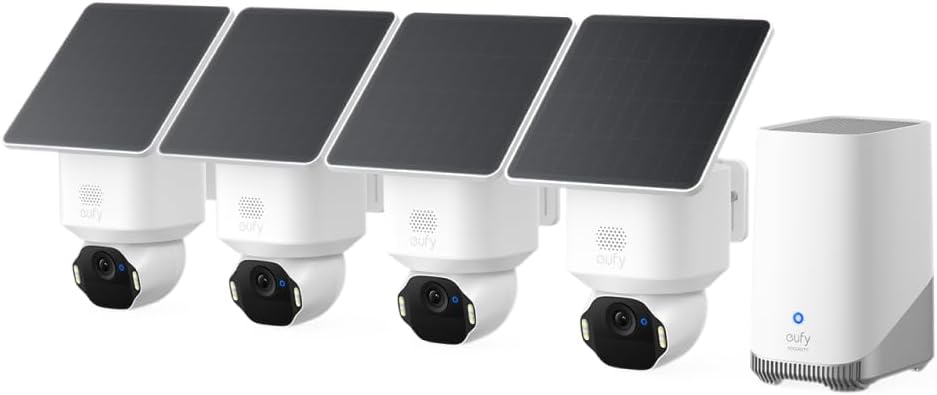
eufy Security SoloCam E42, 4-Cam Kit, 4K Solar Security Camera
4K detail, solar power, and no subscription required to make it useful
Highest hardware cost of the four
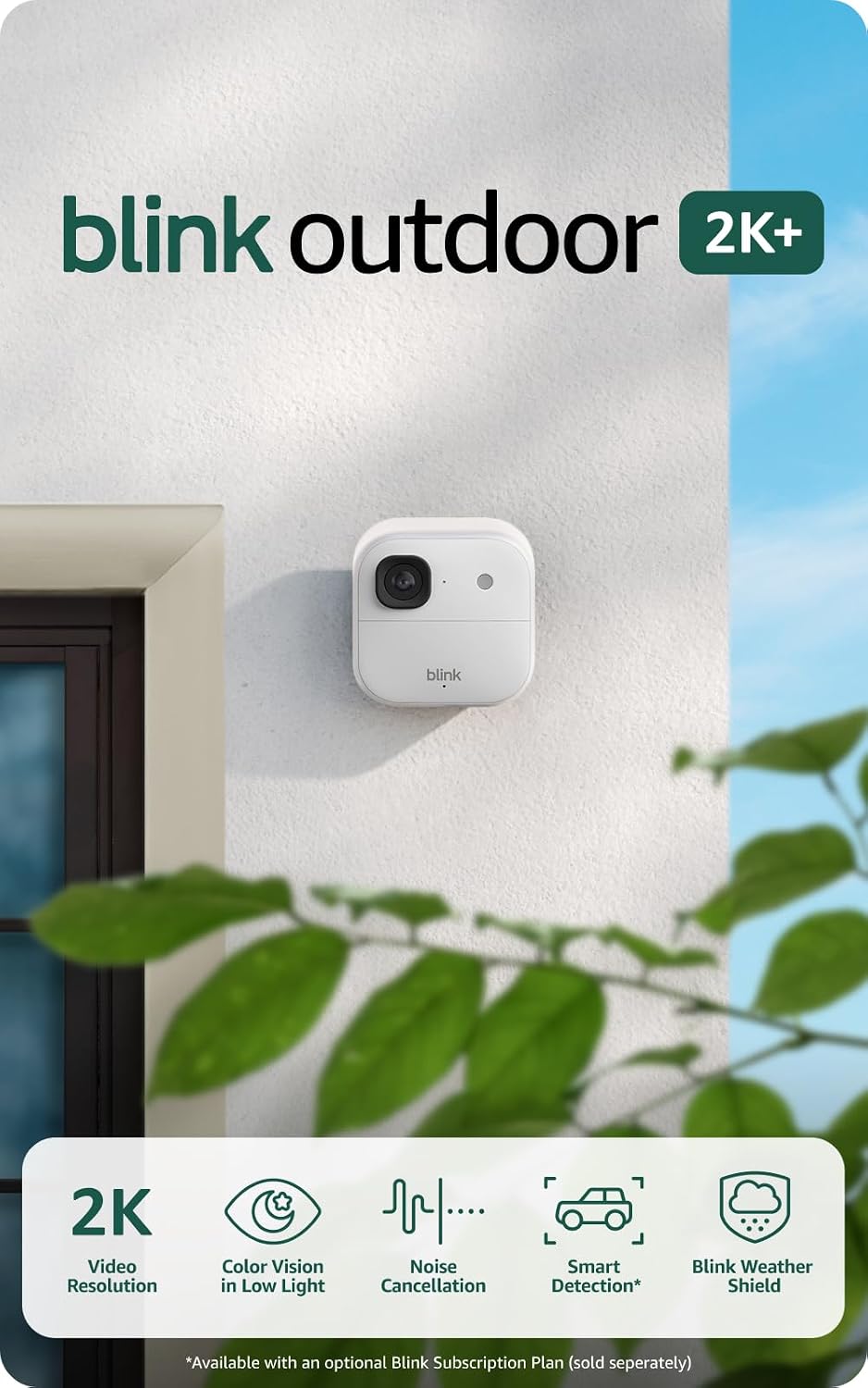
Blink Outdoor 2K+ (newest model), 2K video resolution, enhanced audio, two-year battery, Sync Module Core included, 5 camera system (White)
Five cameras, 2K video, two-year battery claim, the easiest app in the group
Cloud features lean on Blink's plan, and 2K trails 4K
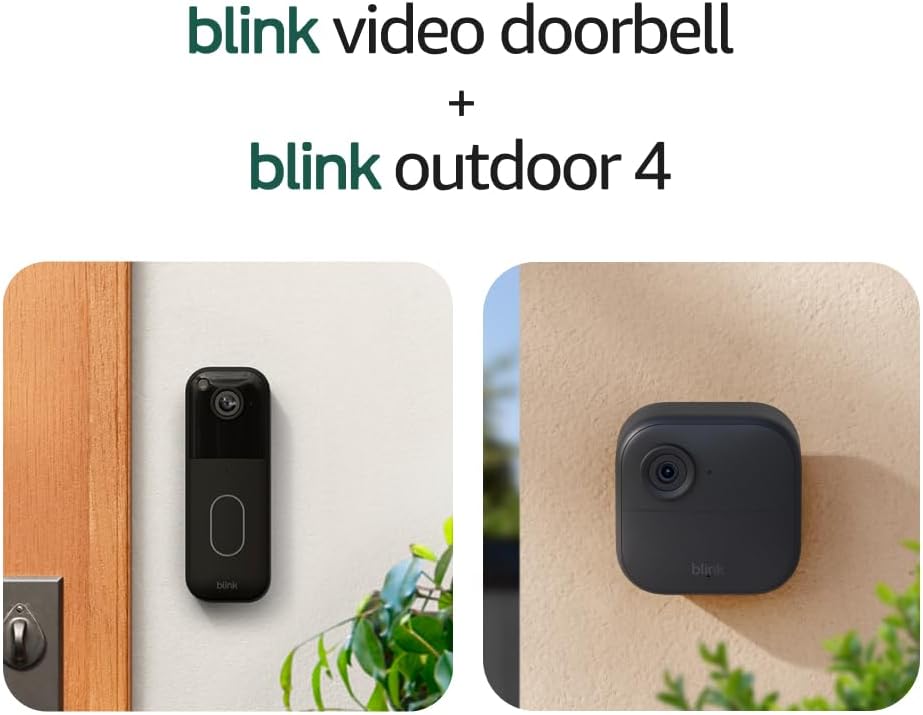
Blink Video Doorbell + Outdoor 4, head-to-toe HD view, two-year battery life, Sync Module Core included, 3 camera system + Video Doorbell
Doorbell plus three cameras, and a doorbell captures faces better than almost any other mount
HD resolution, and the doorbell is the star, not the Outdoor 4s
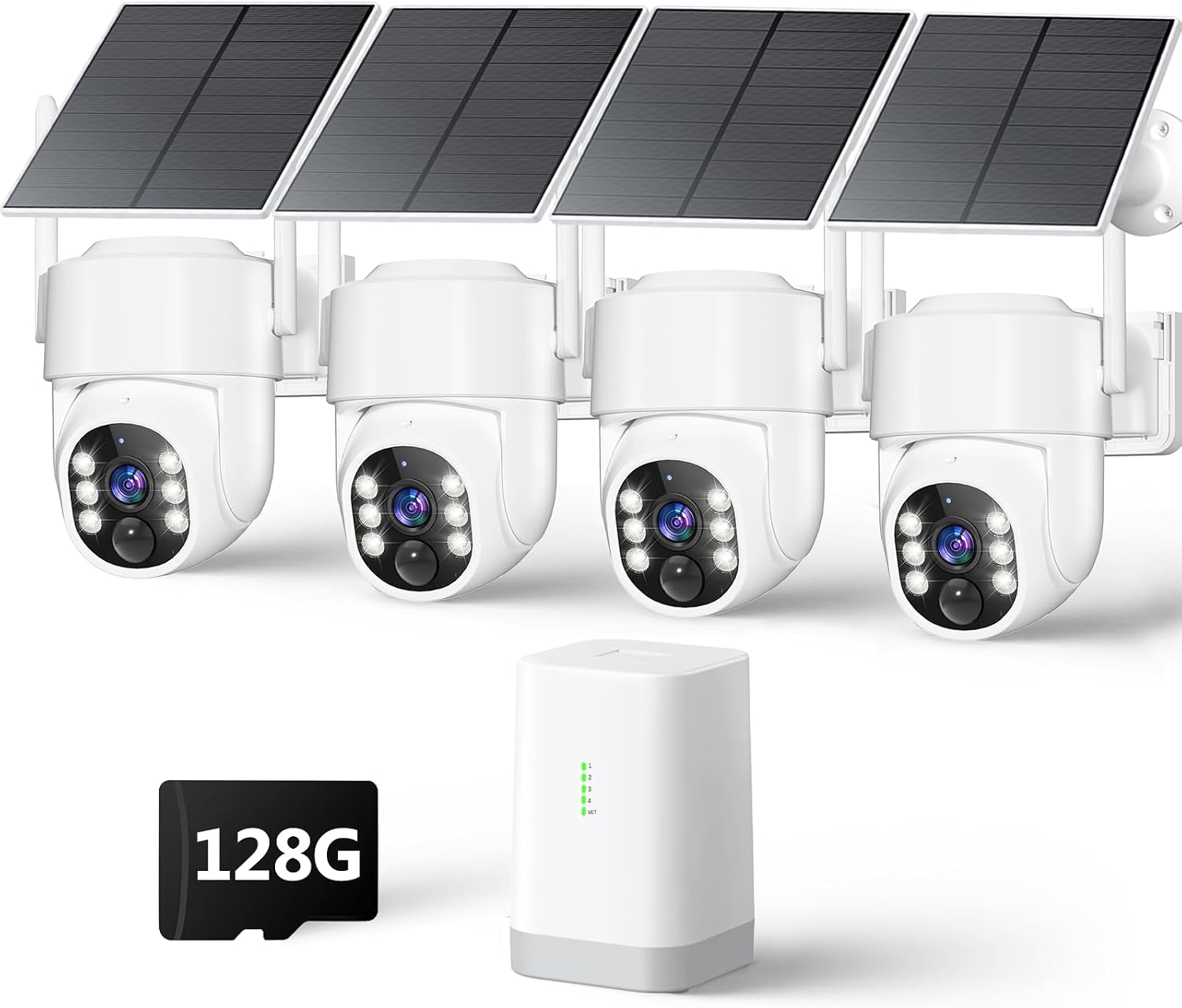
4MP Security Cameras Wireless Outdoor, No Subscription 128GB Local Storage, Solar Powered, PTZ Auto Tracking, 4Cam-Kit, Color Night Vision, 5G and 2.4G
128GB of local storage in the box, PTZ auto tracking, solar
4MP resolution trails 4K, and the app ecosystem is thinner
Prices and availability were captured from Amazon Creators API and may change.
How I judge a multi-camera kit
Four criteria, in this order.
Night identification range comes first, because a camera that cannot resolve a face at 20 feet is a motion sensor with a light on it. This is where cheap hardware exposes itself: IR washout blows out anything inside 15 feet while the camera strains to light up 50, so you get a white blob with shoulders. Everything inside the ID range is evidence. Everything past it is decoration.
False alert volume comes second. A week of raccoon clips is the number one reason people mute their own security cameras, and a muted camera does not exist. Person detection only counts if it still works at 2 AM, when the porch light is off and the only thing moving is a cat.
Storage comes third. I want footage on a card or a drive inside my house, not in a vendor's cloud where a legal request can quietly make it disappear. Local storage is not a privacy slogan. It is the difference between owning the clip and renting access to it.
And fourth, the three-year cost. Hardware is the down payment. The subscription is the price.
eufy Security SoloCam E42, 4-cam kit: the 4K, no-subscription pick
Four solar cameras at 4K, and no subscription standing between you and the footage. On paper this is the strongest combination in the group for one reason: 4K buys you pixels to crop, and cropping is how you turn a 30-foot driveway shot into something a detective can use. Solar means you mount them and forget the ladder, which matters more than any spec sheet number, because the best camera is the one you actually install.
The honest caveats. This is the most expensive kit here, so the hardware is where the money goes instead of a monthly plan. Solar cameras live and die by placement: a panel in Seattle shade in December is a panel doing nothing, so plan the mount before you drill. And eufy's older models had cloud access settings people could not fully lock down, so read the current listing's storage details carefully rather than assuming. If you refuse to pay a subscription and you want the sharpest image of the four, this is where I would start.
Blink Outdoor 2K+ 5-camera system: coverage in an afternoon
Five wireless cameras, 2K video resolution, enhanced audio, a two-year battery claim, and the Sync Module Core included. If your problem is a property with too many blind spots and no easy way to run cable, five cameras solves more of your actual problem than one better camera does. The app is the friendliest in this comparison, and friendly matters when the alternative is a system nobody opens after week two.
What you give up: 2K is a real step above HD but not 4K, so fine detail at distance is not this kit's strength. Five battery cameras also means five batteries eventually, and the two-year figure is the manufacturer's estimate under ideal conditions, not a guarantee. And the features people actually want, like person detection and cloud clips, run through Blink's subscription plan. Budget for the plan or accept a narrower feature set. Check current Amazon price and add the plan cost to it before you decide.
Blink Video Doorbell + Outdoor 4: the front-door kit
Three Outdoor 4 cameras plus a video doorbell, with the head-to-toe HD view on the doorbell and a two-year battery claim on the cameras. The doorbell is the reason to buy this bundle. A doorbell mount sits at face height, at a natural distance, exactly where people look when they approach a house, so it does the identification work that a camera bolted to a garage corner struggles with. If you only have budget for one camera position on your whole house, it should be the front door.
The Outdoor 4s are HD, not 2K, so treat them as coverage rather than identification. They are fine for watching a side gate or a back fence, and the Sync Module Core ties the set together. This is also the kit I would hand to someone who does not want to think about cameras at all. The trade-off is the same as the other Blink system: the good features ride on the subscription.
The 4MP solar 4-cam kit: storage per dollar
This is the value play, and it is not a subtle one. Four solar cameras, 128GB of local storage included, no subscription required, PTZ auto tracking, color night vision, and both 5G and 2.4G Wi-Fi support. The PTZ auto tracking is the feature I would not overlook: a camera that pans and follows movement covers a wider arc than a fixed lens at the same price, which is how you get away with four cameras where a fixed system might need six.
The compromise is resolution. 4MP is meaningfully below 4K, so at 30 feet in low light you will see a person, a jacket, and a direction of travel, but you may not get the detail that turns a description into an identification. Confirm in the listing whether the 128GB is shared across the kit or per camera, since that changes how many days of footage you actually keep. If your priority is footage that lives in your house with no monthly bill, this kit delivers that for the least money here.
The subscription math
Nobody sells a camera. They sell a camera and a plan. So run the arithmetic before you buy, not after.
Take the hardware price, check current Amazon price on the listing, then add the plan you would realistically need multiplied by 36 months. That total is the real cost of the system, and it is the number that should decide between these kits. A cheaper box with a mandatory-feeling plan can pass a more expensive box with none, and it usually does by year two.
This is the clearest split in the group. The eufy kit and the 4MP solar kit are built so that local storage is the default, which means the three-year number stays close to the sticker. The two Blink systems are pleasant, polished, and at their best with a plan attached, so their three-year number is the sticker plus three years of service. Neither approach is wrong. One of them is wrong for your budget, and only you know which.
Where each kit loses
The eufy kit loses on upfront cost and on solar placement. Shade and winter are real enemies, and a 4K camera with a dead battery is a paperweight.
The Blink 2K+ five-camera system loses on resolution and on the battery count. Five cameras means five maintenance stops, and 2K is not the format you want if identification at distance is the whole point.
The Blink doorbell bundle loses on camera quality outside the doorbell. The Outdoor 4 units are coverage cameras, not identification cameras.
The 4MP solar kit loses on image detail and ecosystem polish. It is the kit you buy for storage and tracking coverage, not for the sharpest face at 40 feet.
What I would install on my own house
Renting, or one door and no drilling: the Blink Video Doorbell + Outdoor 4 bundle. The doorbell does the work that matters.
A large property with no wiring and a need for coverage this weekend: the Blink Outdoor 2K+ five-camera system. Five mounts beat one perfect mount when you are covering ground.
No subscription, best image, and you will place the solar panels properly: the eufy Security SoloCam E42 kit.
No subscription, tightest budget, and you want the footage in your own house: the 4MP solar 4-cam kit.
Before you mount anything
Walk your property at night with a flashlight and find the three approaches that matter. Put a camera where faces are, not where the view is pretty. Then do the thing almost nobody does: set detection zones tight enough to exclude the street, count your false alerts for a full week, and only then decide whether the person detection is trustworthy. Test at 2 AM with a hooded friend at 10, 20, and 30 feet, and look at the actual clip on your phone, not on a laptop screen.
The Garage Log started with a blurry raccoon because I bought a camera from a deals email and never asked it a single hard question. Ask the hard questions first. No face, no case is not a slogan. It is what the detective says when you hand him footage that cannot identify anyone.