On a Tuesday at 3:07 AM in February, someone pried open the side door of my garage in Seattle and carried off two bikes, a toolbox, and my late father's camping gear. The camera I had bought a week earlier from a deals email recorded 22 minutes of a blurry raccoon and a dark shape that never once became a face. The detective was polite about it: no face, no case. That night is why I compare home security camera systems the way I do now, and why this comparison leads with night identification instead of megapixels.
Related: Why Crystal-Clear Night Vision Usually Isn't
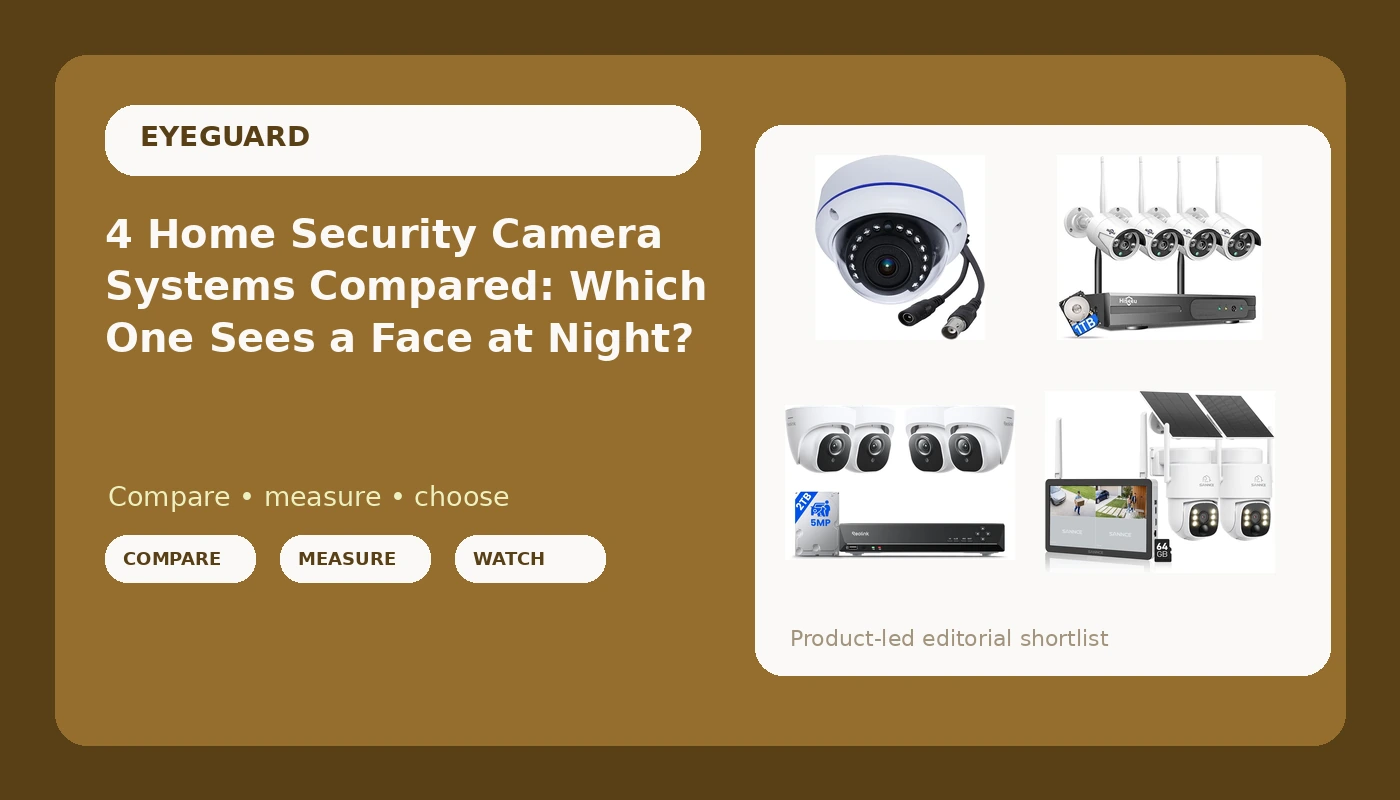
For most houses, the strongest pick here is the wired Reolink kit, because local storage, a real hard drive, and a sensor that holds detail after dark are the three things that turn footage into evidence. The other three exist for real reasons, though, and two of them solve problems the Reolink kit cannot solve at all.
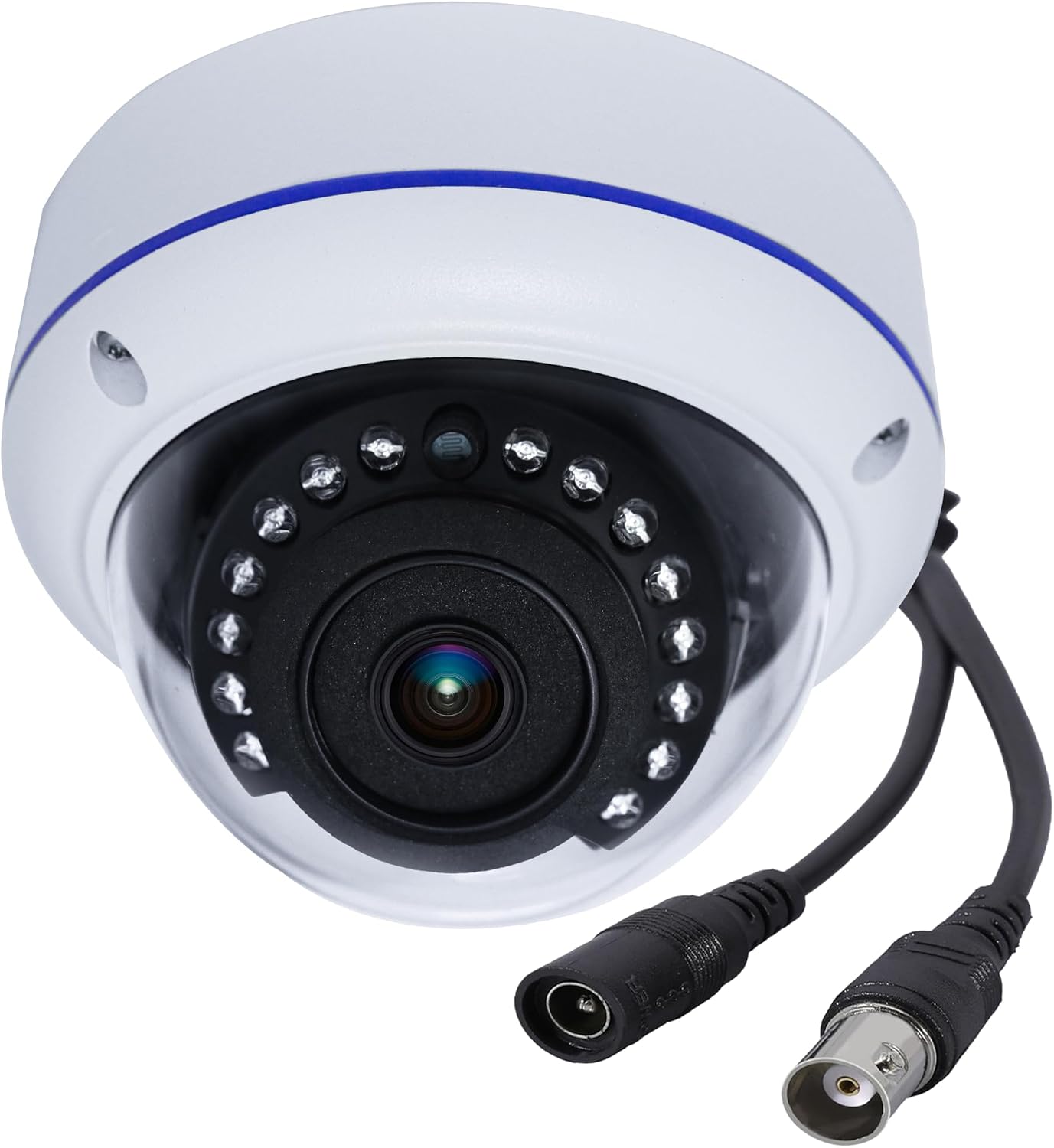
HD 1080P 2MP 180 Degree Fisheye Dome Security Camera
Cheapest way to widen an existing analog system, one camera covers a whole garage bay
Needs a recorder you probably already own, and wide glass means small faces
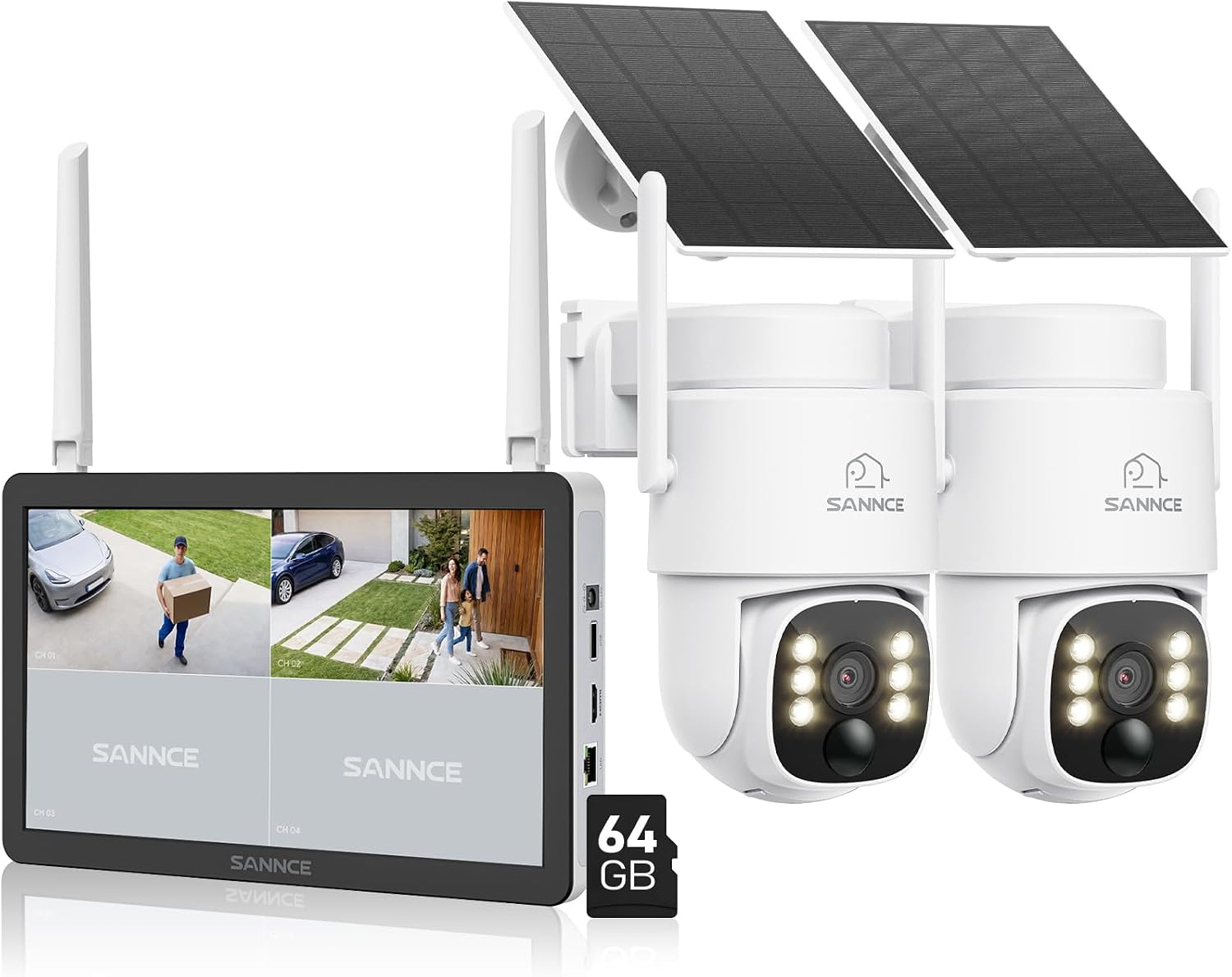
SANNCE 2K Wireless Solar Powered Camera System, 4K NVR with 2PCS 4MP Camera
No outlet needed at the camera, solar keeps it running, NVR keeps footage at home
Two cameras is thin coverage, and Seattle winters are not solar weather
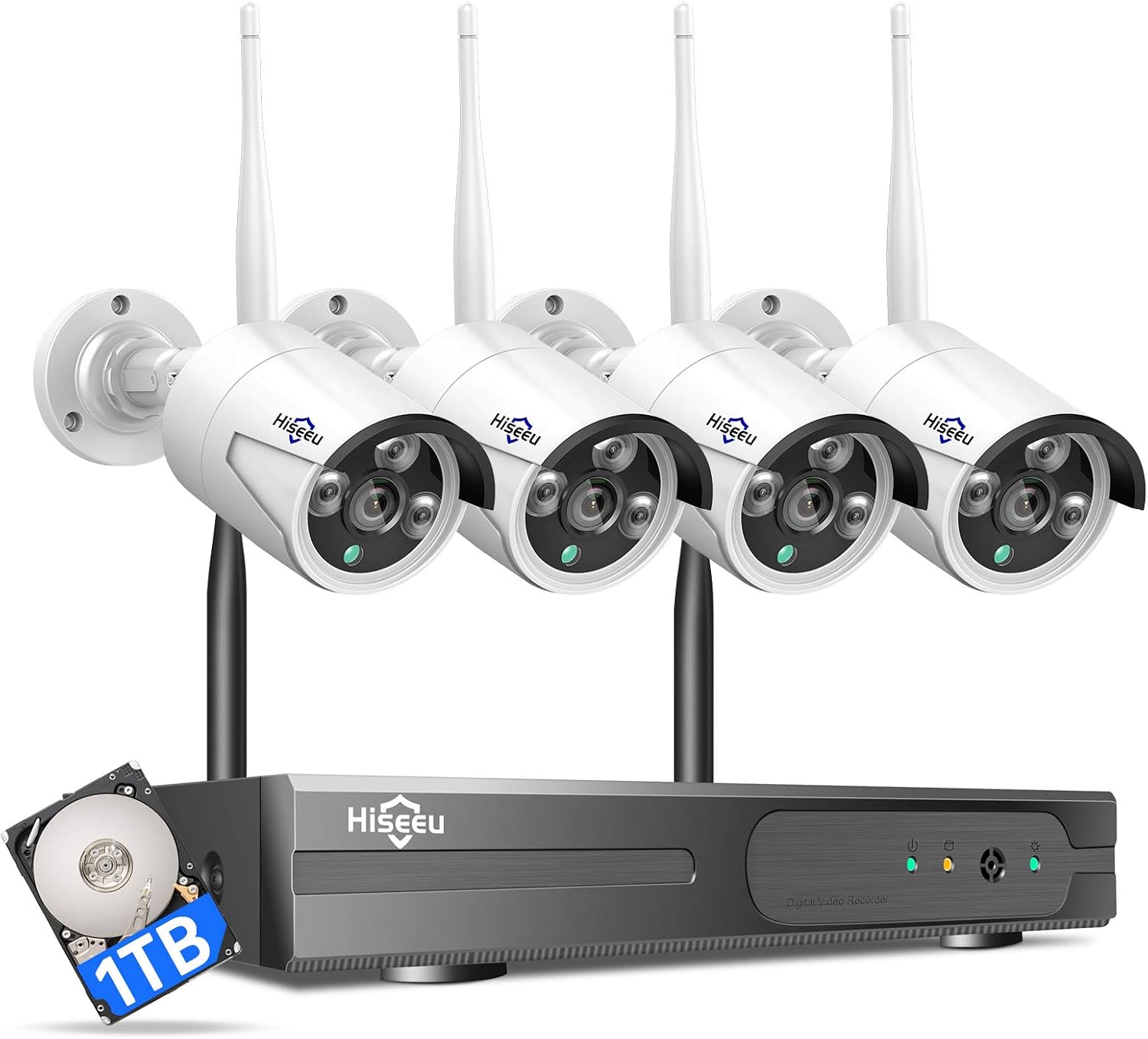
[100ft] Hiseeu Wireless WiFi Security Camera System, Expandable 16CH 4K NVR, 4Pcs 3MP Night Vision Cameras
Four cameras, a 1TB drive in the box, and room to grow to 16 channels
Cameras still need power, and the 4K NVR records 3MP cameras
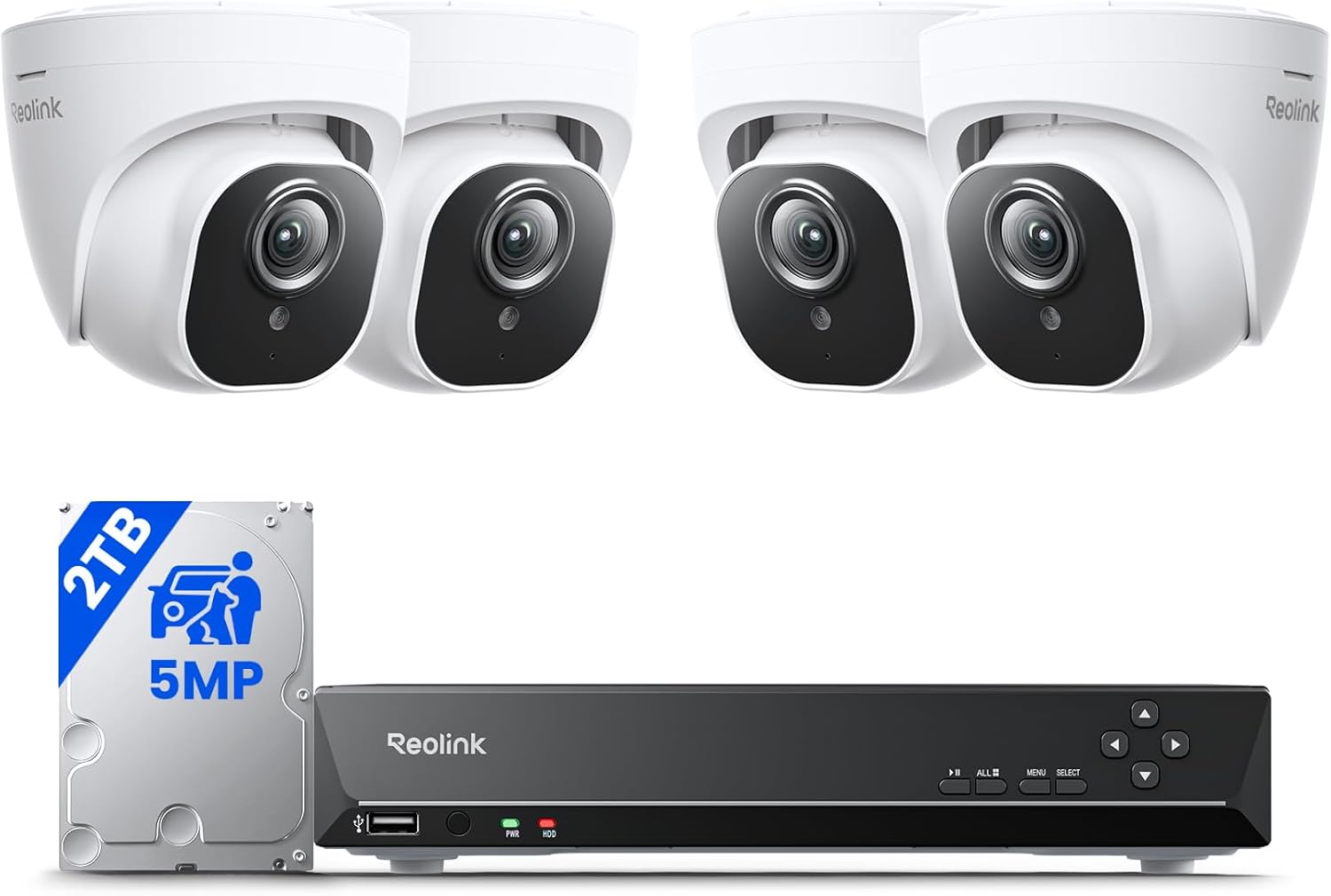
REOLINK 5MP 8CH Home Security Camera System with 2TB HDD RLK8-520D4-5MP
5MP sensors, 2TB of local storage, wired reliability, no subscription to watch your own footage
You are drilling holes and pulling cable, and that is not a weekend everyone wants
Prices and availability were captured from Amazon Creators API and may change.
What these four products actually are
These are not four versions of the same thing, and pretending otherwise is how people buy the wrong box.
One of them is a single dome camera. The 180 degree fisheye with a 1.7mm lens is a coverage device, designed to be wired over coax into a hybrid recorder that speaks TVI, AHD, CVI, or plain BNC analog. It is not a system. It is a piece you add to a system, and it only makes sense if a recorder already lives in your closet.
Two of them are complete kits with a network video recorder and a hard drive included: the Reolink 8-channel kit with a 2TB drive and 5MP cameras, and the Hiseeu kit with a 16-channel recorder, a 1TB drive, and four 3MP cameras on 100 feet of cable.
The fourth, the SANNCE, is the odd one in the best way. It pairs a 4K NVR with two 4MP cameras that run on solar, which means no outlet and no cable run to either camera.
Different jobs. Different buyers. So the comparison has to be about constraints, not about which spec sheet has the bigger number.
Wired, wireless, and solar: pick your constraint first
Every camera on this list needs power. None of them are battery-only. That matters because "wireless" gets used to mean two different things: wireless video transmission, and no wires at all. Only the SANNCE kit gets close to the second one, and it does it with a solar panel rather than a battery you swap every few months.
The Hiseeu kit is wireless in the transmission sense. The cameras are described as wired plug-in powered, so each one still needs an outlet or an extension cord, but the video travels over WiFi to the NVR instead of through a cable you fish through a wall. That is a genuinely easier install. It is also the reason I would not put it at the far end of a detached garage with three walls between camera and recorder.
The Reolink kit is the opposite trade. Cameras cable back to the recorder, which means drilling, which means a Saturday, which means a conversation with whoever shares your house about where the holes go. In exchange you get a link that does not care about WiFi congestion, a neighbor's new router, or a microwave.
The fisheye dome sits outside this argument entirely. Coax is coax. If you have a recorder, it plugs in and works. If you do not, you are buying a camera with nowhere to send its picture.
The resolution trap: NVR channels versus camera sensors
Read the product names on this list carefully and you will catch something. The Hiseeu kit advertises a 4K NVR. Its cameras are 3MP. The SANNCE kit advertises a 4K NVR. Its cameras are 4MP. The Reolink kit's cameras are 5MP.
The recorder is the ceiling, not the floor. A 4K NVR means the box can accept and output up to 4K worth of channels. It does not mean the cameras on the end of the cable are recording 4K, and no amount of marketing changes what a 3MP sensor captures.
What you actually care about is how much detail survives at 20 feet in the dark. That is a function of sensor, lens, infrared illumination, and bitrate, in roughly that order. A 5MP camera with a decent lens will resolve a face at a distance where a 2MP camera has already given you a silhouette. A 3MP camera sits in between.
The fisheye is the clearest illustration of why megapixels alone are a bad shortcut. Two megapixels spread across 180 degrees is a lot less detail per degree than two megapixels across a normal lens. You get the whole driveway in frame and a face the size of a thumbnail. That is a coverage camera, not an identification camera, and it should be judged as one.
Also worth knowing before you mount anything: infrared washout. Cheap cameras blast IR at everything nearby and blow out faces at close range while reaching hopefully into the dark for something 40 feet away. When you position a camera, test the near field, not just the far field. The person who breaks into your garage will be standing three feet from your door, not fifty.
Where the footage lives, and what the subscription really costs
This is the part of the decision that outlasts every spec on the box.
All three kits here include a hard drive, which means local storage out of the gate: 1TB on the Hiseeu, 2TB on the Reolink. That footage sits in your house. No vendor can quietly expire it, no legal request to a cloud provider can reach it, and nobody bills you monthly to watch a clip of your own driveway. For me that is not a feature, it is the baseline.
Drive size is not really about capacity, it is about how far back you can look. More cameras and higher resolution fill a drive faster. A four-camera 3MP kit on a 1TB drive and a four-camera 5MP kit on a 2TB drive are not as far apart as the numbers suggest, but the 2TB kit gives you more margin before you start deciding which days of footage you are willing to lose.
Then there is the subscription question, which is the one I want answered in writing before I recommend anything. Some systems let you replay footage from the drive in your own house without paying. Some put person detection, cloud clips, or even basic playback behind a monthly fee. The hardware is the down payment. The subscription is the price.
My rule, and I apply it to every camera I look at: add three years of whatever the app insists you pay, and put that number next to the hardware price. If a "free" camera costs more than a wired kit over three years, it was never the cheaper camera. You will not find that math on the product page, which is exactly why it belongs in a comparison.
The case for one wide-angle camera
Not everyone needs four cameras and a recorder. If your weak point is a single garage bay, a side yard, or a small shop interior, the fisheye dome is the least expensive way to stop having a blind spot.
A 180 degree view from one mount does something four narrow cameras cannot do: it removes the gaps between them. There is no seam for someone to walk through, and no guessing which camera caught the movement.
The honest limitation is identification. Wide glass plus a modest sensor means faces get small fast. If your goal is a wide situational view that feeds into an existing recorder, this is a smart, cheap add. If your goal is handing a detective a face, this is not the camera that does it alone. Pair it with something narrower aimed at your door, and it earns its place.
The trade-offs I would say out loud
The SANNCE kit's solar panels are the reason I keep coming back to it for awkward installs, and also the reason I would not make it my only system in Seattle. Solar cameras depend on sun. In December, in this city, the sun is a rumor. If you live somewhere with real winter, treat solar as a summer convenience, not a guarantee, and check what the camera does on day four of gray skies.
The Hiseeu kit wins on expandability. Sixteen channels on the recorder means you can add cameras for years without replacing the brain, and 100 feet of cable covers more yard than most people realize. The catch is the 3MP cameras on a 4K recorder, and the fact that each camera still wants an outlet.
The Reolink kit is the one I would put on my own garage, and I say that knowing it is the most work to install. 5MP cameras, 2TB of local storage, an 8-channel recorder, and a system that does not need anyone's permission to show me last Tuesday at 3 AM.
The fisheye is the specialist. Buy it to fill a hole in an existing setup, not to be the setup.
Which one I would mount on my own garage
If you already own an analog recorder and one dark corner keeps bothering you, Visit on Amazon → for the fisheye dome and stop thinking about it. It is the smallest purchase on this list and it solves one specific problem well.
If running cable is off the table because you rent, or the camera locations are nowhere near an outlet but do get sun, Visit on Amazon → for the SANNCE solar kit. Two cameras is thin, so plan to add more, but the NVR keeps your footage home.
If you want the most cameras for the fewest compromises and you like the idea of growing the system later, Visit on Amazon → for the Hiseeu kit. Four cameras, a 1TB drive, and a 16-channel ceiling to grow into.
If you want the best night detail per dollar and you are willing to spend a weekend with a drill, Visit on Amazon → for the Reolink kit. This is the one I would hand a detective.
Three questions before you check out
First: can this camera identify a face at 20 feet at night, or does it only detect motion? Motion detection tells you something happened. Identification tells you who. Those are different products and only one of them is security.
Second: what does this cost over three years, subscription included? Add it up before you buy, not after.
Third: where does the footage live, and who else can see it? If the answer is a vendor's server, understand what you are trading for the convenience.
I learned all three the hard way, standing in a cold garage at 3 AM, watching a raccoon walk through my evidence. Whatever you mount, mount it so that never happens to you.