A home security camera system is only worth the footage it can hand to the police. I learned that the hard way when my first camera gave me 22 minutes of a blurry raccoon and a dark shape that never became a face. The detective was polite about it: "No face, no case." Since then I have mounted cameras on my garage and fence and tested them at night with targets at 10, 20, 30, and 50 feet, and the same lesson keeps coming up: resolution matters less than night ID range, local storage matters more than cloud promises, and the subscription is the real price. This explainer walks through the four pieces of a complete setup: a wired NVR system for evidence, a front-door smart lock with a camera, Android-compatible trackers for recovery, and a no-WiFi indoor monitor. Each one fills a different gap, and together they cover the break-in from the first step to the recovery.
Related: The Best Night Vision Security Cameras for Face ID →
Quick answer
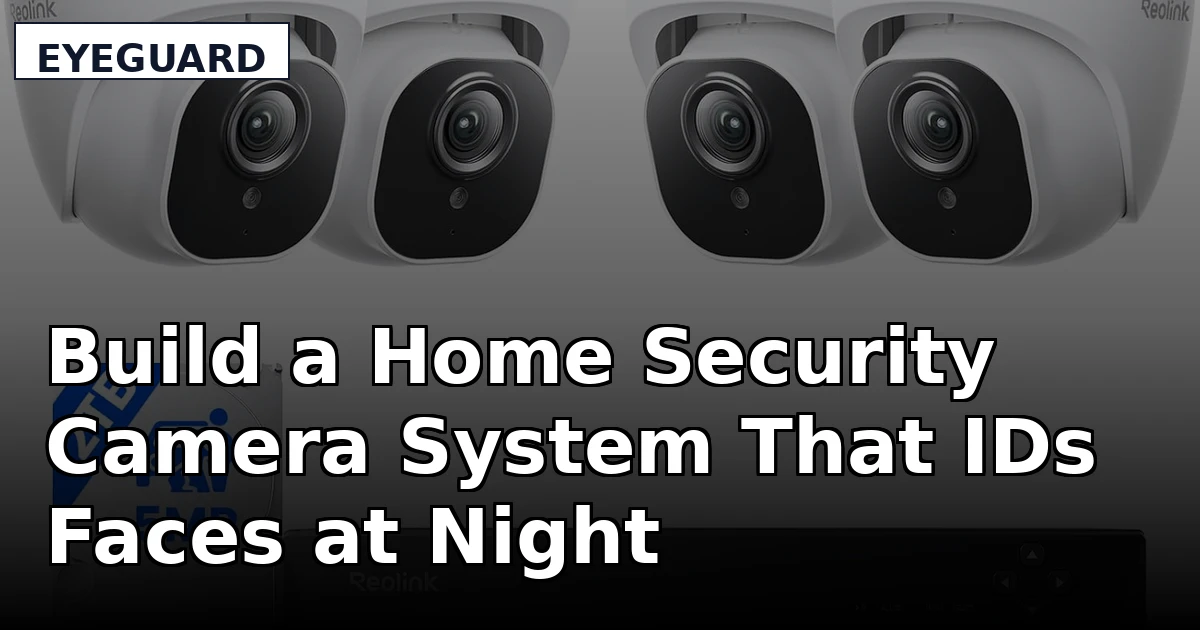
For most homes, the REOLINK 5MP 8CH Home Security Camera System with 2TB HDD is the backbone: footage stays on a local NVR, there is no subscription to replay or export clips, and the 5MP sensors give a realistic chance of identifying a face at night. Pair it with the eLinksmart smart lock for the front door, the Air Tags for Android 4-pack for recovering stolen gear, and the HelloBaby 6-inch split screen monitor for indoor coverage that keeps working when your internet drops. None of these require a monthly fee, which is the point: the hardware is the down payment, and the subscription is the price.
4 useful options
| Model | Best fit | What stands out |
|---|---|---|
| REOLINK 5MP 8CH Home Security Camera System with 2TB HDD RLK8-520D4-5MP | Whole-home wired coverage | 8 channels, 2TB local storage, no subscription |
| Smart Lock with Camera & Video Doorbell eLinksmart Keyless Entry Deadbolt | Front door entry and video | PIR motion, fingerprint keypad, built-in WiFi |
| Air Tags for Android, Air Tags-4 Pack Android | Recovery after theft | Google Find Hub and Apple Find My, 2-year battery |
| HelloBaby 6" Split Screen Video Baby Monitor with 2 Cameras | Indoor monitoring without WiFi | Split screen, two cameras, no WiFi needed |
Whole-home backbone: REOLINK 5MP 8CH Home Security Camera System with 2TB HDD RLK8-520D4-5MP
The trade-off is the install. You are running cable and drilling holes, and the NVR needs to sit somewhere safe inside the house, not in the garage next to the cameras. That effort is exactly why this system is the evidence layer: the footage is on a hard drive in your home, so no legal request to a cloud provider can quietly delete it, and no subscription paywall blocks you from exporting the clip you need. In my testing, a wired system with a proper sensor and local storage is the difference between handing the police a face and handing them a raccoon.
Front door entry and video: Smart Lock with Camera & Video Doorbell eLinksmart Keyless Entry Deadbolt
The front door is the most common entry point in a break-in, so the lock and the camera belong together. This unit handles both: the deadbolt controls who gets in, and the PIR motion detection wakes the camera when someone steps onto the porch. The 365-day battery matters because a door lock that dies during a power outage is a lock you cannot use. The trade-off is scope: this is an entry camera, not a yard camera. It will tell you who is at the door, but it will not watch the back fence. That is what the wired system is for.
Recovery after theft: Air Tags for Android, Air Tags-4 Pack Android
Cameras catch the face; trackers recover the stuff. After my garage break-in, the stolen gear was gone in minutes, and no camera angle helped because the footage was useless. A tracker hidden inside a bike frame or a toolbox gives you a second chance: when the police have a face, a tracker gives them a location. The 2-year battery and IP65 waterproofing mean you can hide one in a saddle bag or tape it under a workbench and forget about it. The trade-off is honest: trackers do not prevent theft, and they only work if the tag stays with the item. They are the recovery layer, not the deterrent.
Indoor monitoring without WiFi: HelloBaby 6" Split Screen Video Baby Monitor with 2 Cameras
This is the gap-filler for the inside of the house. A wired NVR covers the perimeter, but indoor coverage often needs a camera that is not tied to your internet connection. The HelloBaby uses a dedicated link between the camera and the 6-inch screen, so a dropped router or an ISP outage does not blind you. It is also simpler for a non-technical household: no app, no account, no firmware updates. The trade-off is real: it is a baby monitor, not a security NVR. There is no cloud recording, no person detection, and the range is limited to the house. But for a nursery, a back hallway, or a home office, it adds indoor eyes without adding a subscription.
Prices and availability may change. Product images, names, and retailer links must be matched by verified ASIN. Do not state a current price, rating, stock status, or measured result without current evidence.
What night ID range actually means
Night ID range is the distance at which a camera captures a face or a license plate you could actually hand to the police. Everything inside that range is evidence; everything past it is decoration. Marketing photos always show a perfectly lit yard at midnight, but the real test is what happens at 20 feet with a person in a dark jacket. Two things kill night ID range: IR washout and a small sensor. IR washout is when the infrared illumination overexposes nearby objects, the classic blurry raccoon effect, and cheap cameras blow out anything within 15 feet while trying to light up 50. A larger sensor, like the 5MP units in the Reolink system, captures more light per pixel and keeps detail at distance. When you see "crystal-clear night vision" on a spec sheet, ask one question: at what distance can you read a face? If the answer is not printed, assume it is 12 feet.
The practical test is simple. Put a chair at 20 feet, sit in it at night, and review the clip. If you can identify yourself, the camera has real night ID range. If you see a shape, it is security theater with a blinking LED. This is why I test every camera at 10, 20, and 30 feet before recommending it, and why the Reolink system earns its place as the backbone: the sensor size and local recording give you a clip worth keeping.
The subscription is the real price: 3-year cost math
The hardware is the down payment; the subscription is the price. A camera that costs $100 but needs $10 a month for cloud storage and person detection costs $460 over three years. A camera with local storage and no subscription costs what you pay at checkout. The Reolink system stores footage on the included 2TB hard drive, so replay, export, and person detection do not require a monthly fee. The eLinksmart lock and the HelloBaby monitor have no subscription either, and the Air Tags have no ongoing cost beyond the battery. That is the whole point of a layered setup: every layer works without a recurring fee.
Here is the method I use to evaluate any home security camera system:
- List every camera you actually need: front door, garage, back yard, side gate, indoor hallway.
- Count the channels and storage: an 8-channel NVR with 2TB covers a typical house; a single battery cam does not.
- Calculate the 3-year cost with the subscription included, not just the hardware price.
- Check where the footage lives and whether replay or export requires a subscription.
- Test night ID range before mounting: put a target at 20 feet and look at the clip at night.
If a camera cannot pass step 5, the price does not matter. If it fails step 3, the subscription is the real price. The Reolink system passes both, which is why it is the backbone of this setup.
Practical guidance for a layered install
- Mount cameras at 8 to 10 feet, angled down to catch faces, not rooftops or tree branches.
- Set detection zones to exclude the street and the neighbor's driveway, or false alerts will bury your real notifications.
- Keep the NVR and hard drive inside the house, not in the garage next to the cameras, so a thief cannot grab the evidence on the way out.
- Hide trackers inside gear, not on the outside, where they can be pulled off in seconds.
- Test the whole system at night before you need it: walk to 20 feet, check the clip, and confirm you can identify yourself.
Which option should you choose?
Choose the REOLINK 5MP 8CH Home Security Camera System with 2TB HDD RLK8-520D4-5MP when you want whole-home wired coverage with local storage and no subscription. Choose the Smart Lock with Camera & Video Doorbell eLinksmart Keyless Entry Deadbolt when the front door is your main entry risk and you want the lock and camera in one unit. Choose the Air Tags for Android, Air Tags-4 Pack Android when you want a recovery layer for bikes, tools, and luggage. Choose the HelloBaby 6" Split Screen Video Baby Monitor with 2 Cameras when you need indoor monitoring that works without WiFi or a cloud account.
The HelloBaby is a baby monitor, not a security NVR, so its range and recording features are limited. Trackers only help recovery, not prevention. The eLinksmart camera covers the entry, not the yard. No single product in this list does everything; the strength is in the combination.
The bottom line
A home security camera system that can actually identify a face at night is a layered system: a wired NVR with local storage for evidence, a smart lock with a camera for the front door, trackers for recovery after a theft, and a no-WiFi monitor for indoor coverage. None of these require a subscription, and none of them depend on a cloud provider to keep your footage safe. Start with the Reolink system as the backbone, add the eLinksmart at the front door, hide the Air Tags in your most valuable gear, and use the HelloBaby for the rooms the wired cameras cannot see. That combination gives you the one thing a security camera is supposed to provide: a face the police can actually use.