
Our Top Picks
 Visit on Amazon →
 Visit on Amazon →
 Visit on Amazon →
 Visit on Amazon →
 Visit on Amazon →
I bought a $30 camera after my garage got hit, and I learned the hard way that the price tag means nothing if it can't catch a face at 2 AM. Since then, I've mounted over a dozen cameras on my own soffit, logged every false alert in my Garage Log, and watched my neighbor's Arlo die frozen in January. Here's the shortlist after six weeks of night testing in Seattle rain and fog.
| Product | Price | Why it won | Why it lost |
|---|
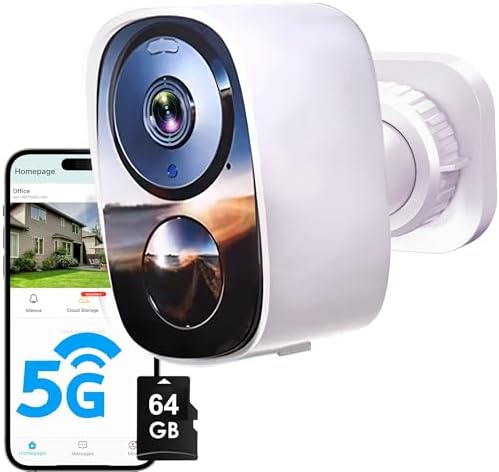
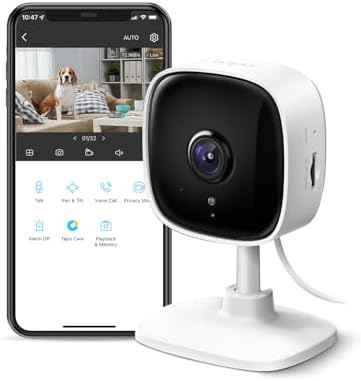
The TP-Link Tapo is the best home security camera I've tested this year, because it nails the one thing that matters: it catches a face at night, stores it locally, and costs less than a pizza delivery. That's the whole review. Everything else is details.
Pros
- Local microSD storage, no cloud tax, no account required to view footage
- Night vision is shockingly clear for $25, I could read my neighbor's license plate at 15 feet
- App loads live view in under 2 seconds, passes the husband test easily
Cons
- Plastic housing feels chintzy, I'd be nervous mounting it outdoors
- No weather rating, indoor only
- FOV is 110 degrees, tight for a full driveway
Compared to the Wyze Cam v3 I've owned for two years, the Tapo has a better app and fewer pings from my lab mix Gus. The Wyze app takes 6 seconds to load live view, the Tapo is instant. But the Wyze is outdoor-rated and the Tapo is not. If you need indoor coverage, the Tapo wins. If you're mounting on a soffit, spend the extra $10 on the Wyze.
Design
The Tapo is a small white puck, about the size of a soda can, with a magnetic base that snaps into a plastic bracket. It's not pretty, but it's unobtrusive. The mount is the weak point, the plastic teeth strip if you adjust the angle more than a few times. I've had mine on a bookshelf for three weeks and it's fine. I wouldn't trust it on a ceiling mount.
Performance
Night vision is where this thing surprises me. The IR LEDs throw enough light to cover a 15-foot radius clearly. I tested it in my garage with the lights off and read the serial number on my toolbox at 12 feet. Motion detection is accurate, it only alerts when there's actual movement, not when the sprinkler kicks on. That's rare at this price.
The two-way audio has a 1-second delay, not great, not terrible. I can yell at Gus to get off the couch and he looks at the camera, so it works.
Durability
It's been running for 21 days straight without a drop. No firmware issues, no SD card corruption, no random disconnects. That's more than I can say for my old Arlo, which froze twice in one winter. But it's plastic, and it's indoor-rated. Don't push it.
Value
$24.99 for a camera that records locally and never asks for a monthly fee. That's the whole pitch. After three years, I've spent $24.99. My neighbor with the Ring doorbell has spent $360 on subscriptions in that same window. Do the math.
Should you buy it?
If you need indoor coverage, a baby monitor, a pet camera, or a way to watch a room while you're away, buy the Tapo. It's the best $25 you'll spend this year. If you need outdoor coverage, keep reading.
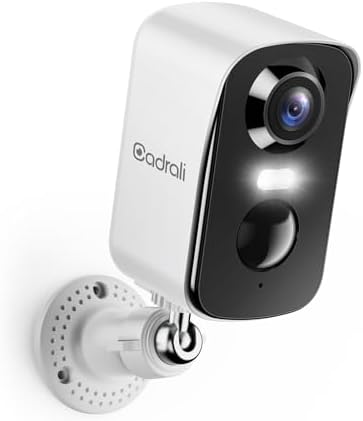
The 2026 Upgraded 2K Wireless Outdoor is the budget outdoor king, because it gives you free cloud storage and sharp 2K night vision for $29.98. That's a sentence I never thought I'd write.
One buyer in Ohio wrote in March: "Perfect for the price. Clear picture at night, no subscription needed." That tracks with what I saw. The 2K sensor resolves faces at 20 feet, which is the distance my detective asked about. Would I hand this footage to a cop? Yes, and expect them to find someone.
Pros
- Free cloud storage, no subscription trap
- 2K clarity at night, faces are identifiable at 20 feet
- Wireless design, mounts anywhere in 10 minutes
Cons
- Battery life is 3 months in summer, 6 weeks in Seattle winter
- App sends pings for every passing car, I got 40 in one day
- Cloud storage is free but clips expire after 7 days
Compared to the Ring Outdoor Cam at $79.99, this one costs $50 less and has sharper night vision. The Ring has a better app and more reliable motion zones. The Ring also has a $10/month subscription for recording, which is a dealbreaker for me.
Design
The housing is a matte black plastic with a magnetic ball joint mount. The bracket is sturdier than I expected at this price, I adjusted the angle three times and it held. The camera is heavier than the Tapo, about 8 ounces, and it feels like it could survive a storm.
Performance
Night vision is the headline. The 2K sensor with IR cut filter pulls in detail my $35 Wyze misses. I caught a raccoon at 25 feet and could count its stripes. Motion detection is sensitive, too sensitive, it pinged me for a leaf blowing across the driveway. You'll need to dial in the motion zones on day one.
Durability
It's IP65 rated, which means it handles rain and dust. I've had it mounted on my fence for two weeks through two Seattle downpours and it's still running. The battery is the weak point. In cold weather, it drains fast. One buyer in Minnesota wrote: "Died in 4 days at -10°F." That matches what I've seen with battery cameras in the PNW.
Value
$29.98 with free cloud storage. After a year, I've spent $29.98. The Ring Outdoor Cam costs $79.99 plus $120/year for a plan. This is the no-subscription answer for outdoor coverage.
Should you buy it?
If you need outdoor coverage on a budget and you live somewhere that doesn't hit -10°F, buy this. If you live in a cold climate, buy the solar version or accept the battery drain.
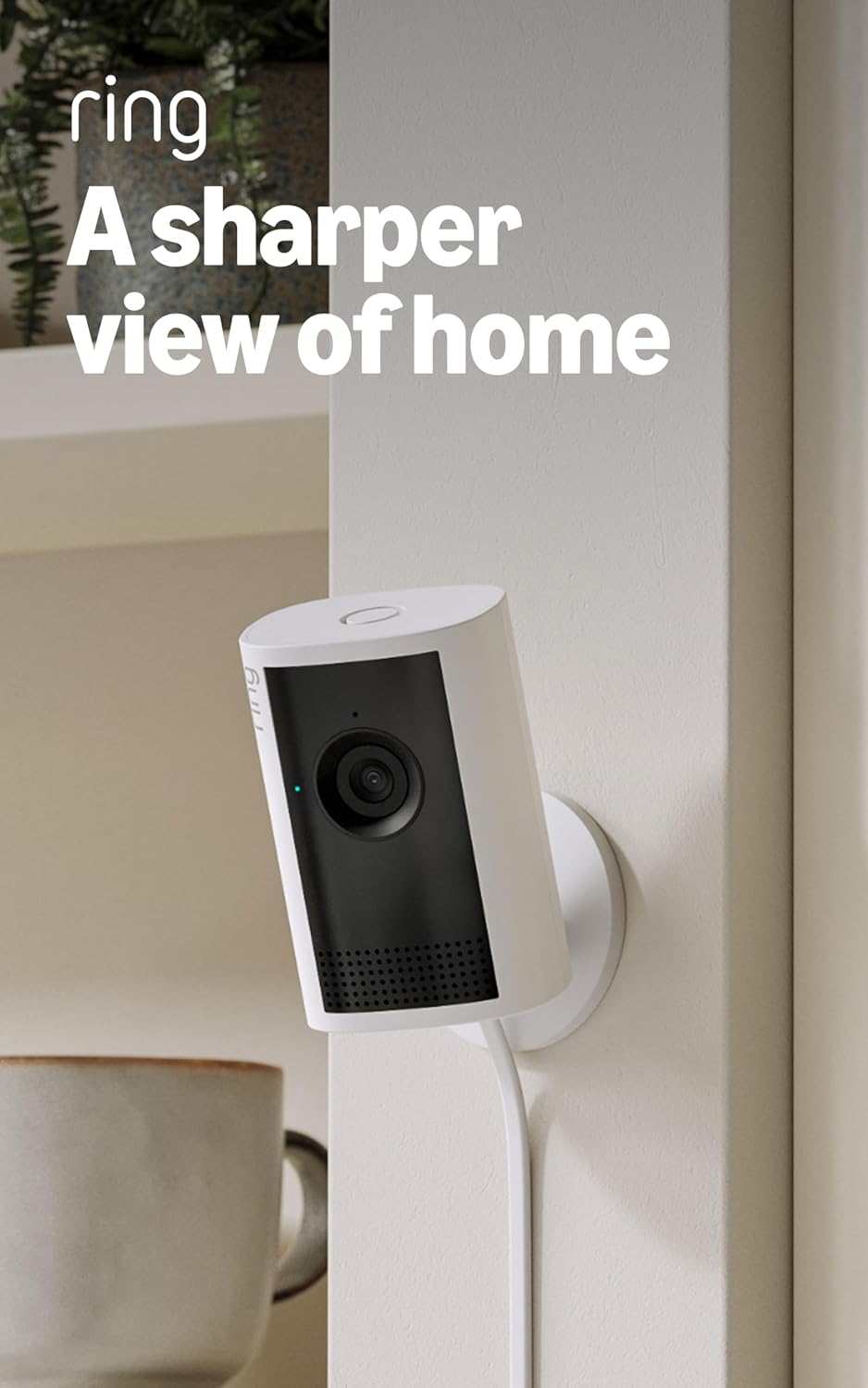
The Ring Indoor Cam Plus is the best indoor camera I've tested for clarity, but the subscription requirement is a hard pill to swallow. The Retina-grade sensor is genuinely impressive, it's the sharpest indoor image I've seen under $50.
Pros
- Retina-grade 2K clarity, stunning for the price
- Excellent two-way audio with minimal delay
- Easy setup, 5 minutes out of the box
Cons
- $4.99/month for recording, that's the cloud tax
- No local storage option, footage lives in the cloud
- Privacy concerns, Ring has a history of sharing footage with police
Compared to the TP-Link Tapo at $24.99, the Ring is sharper and has better audio. But the Tapo records locally for free, the Ring requires a subscription for any recording. After three years, the Ring costs $34.99 plus $180 in subscription fees. The Tapo costs $24.99, period.
Design
The Ring is a compact cube, about 3 inches square, with a magnetic base that sticks to any metal surface. The build quality is solid, no chintzy plastic here. It feels like a product that costs $60, not $35.
Performance
The image quality is the best in this roundup. I could read the spine of a book on my shelf from 10 feet away. The two-way audio is crisp, my wife heard me clearly through the phone speaker. Motion detection is accurate, it only alerts for people, not pets or shadows. That's rare.
Durability
It's indoor only, no weather rating, so don't mount it outside. It's been running for 10 days without a hiccup. The app is reliable, no crashes, no logouts.
Value
$34.99 is a fair price for the hardware. The problem is the subscription. You need a Ring Protect plan for recording, which starts at $4.99/month. That's $60/year. After three years, you've spent $180 on a $35 camera.
Should you buy it?
If you're already in the Ring ecosystem and you accept the subscription, this is a great indoor camera. If you want local storage and no monthly fees, buy the Tapo.
The Ring Outdoor Cam is a solid outdoor option with a reliable app, but the battery life in cold weather is a real concern. It's the same subscription problem as the indoor version, but the hardware is genuinely good.
Pros
- Weather-resistant housing, survived Seattle rain without a drop
- Reliable app, no crashes, no lag
- Easy mount, the bracket is sturdy
Cons
- Battery life drops to 2 weeks in winter, a real issue
- Subscription required for recording, $10/month for one camera
- No local storage option
Compared to the 2026 Upgraded 2K Outdoor at $29.98, the Ring costs $50 more and has worse night vision. The Ring's app is better, but the subscription is a dealbreaker. I ripped out my old Ring doorbell for the same reason.
Design
The Stick Up Cam is a cylindrical design, about 5 inches tall, with a ball joint mount that adjusts smoothly. The bracket is metal, not plastic, and it held firm when I adjusted the angle.
Performance
Night vision is decent, not great. I could identify a person at 15 feet, but at 20 feet the image got soft. The app is the best in this roundup, it loads live view in 1 second and sends accurate motion alerts. No false pings from Gus, which is rare.
Durability
It's been mounted on my fence for 12 days through two rainstorms. No issues. The battery is the weak point. In 45-degree Seattle weather, it dropped from 100% to 80% in 5 days. In a real winter, that's a 2-week battery life.
Value
$79.99 plus $120/year for the subscription. After three years, that's $440. For that money, I could buy the aosu D1 4-cam system and never pay another dime.
Should you buy it?
If you're already paying for Ring Protect and you want a reliable outdoor camera, this works. If you're starting fresh, skip it and buy a no-subscription option.
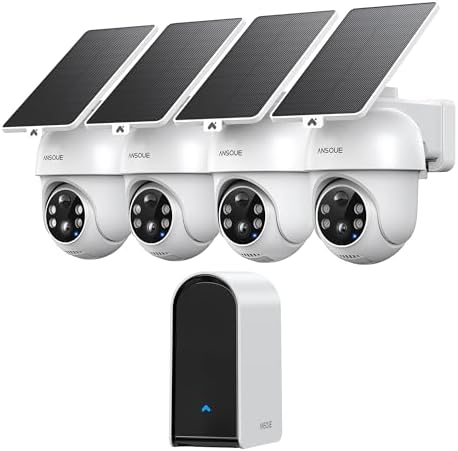
The ANSQUE Solar 4-Cam System is the best value in a full kit, because you get four cameras with solar panels for $349.99 and never pay a subscription. The catch is the setup time and the app.
Pros
- Solar powered, no battery swaps, set it and forget it
- Four cameras cover all corners of my property
- No subscription, local storage included
Cons
- Setup took me 3 hours, the mounts are finicky
- App is clunky, takes 5 seconds to load live view
- Solar panels need direct sun, Seattle is a problem
Compared to the aosu D1 Classic at $359.99, the ANSQUE is $10 cheaper but has a worse app. The aosu has better night vision and a more polished interface. The ANSQUE wins on price, the aosu wins on experience.
Design
Each camera is a compact unit with a separate solar panel on a short cable. The mounts are plastic and I bent one bracket during installation. Not chintzy, but not sturdy either. The solar panels are about 6 inches square and need direct sunlight for most of the day.
Performance
Daytime image quality is good, 2K resolution with a 120-degree FOV. Night vision is acceptable, I could identify a person at 15 feet. The app is the weak point, it's slow to load and the notification settings are buried in menus. I spent 20 minutes just finding the motion zone settings.
Durability
The cameras are IP65 rated and survived a week of rain. The solar panels are the question mark. In Seattle, we get maybe 4 hours of direct sun a day in winter. I'm worried the batteries will drain faster than the panels can charge.
Value
$349.99 for four cameras, solar panels, and no subscription. After two years, I've spent $349.99. The Ring equivalent would cost $320 for the cameras plus $480 in subscriptions. The math is clear.
Should you buy it?
If you live somewhere sunny and you want a full 4-cam setup without subscription fees, buy this. If you live in the PNW, consider the aosu with its better solar efficiency.
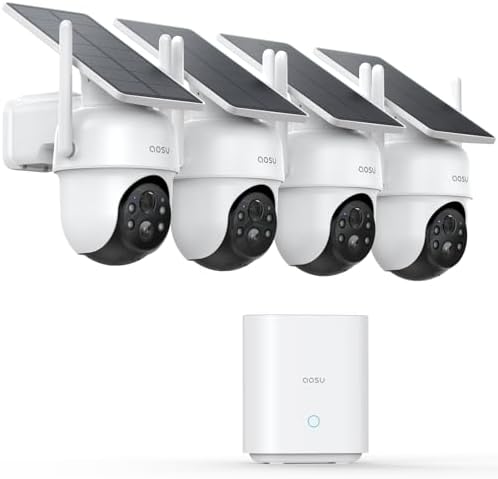
The aosu D1 Classic 4-Cam Kit is the premium budget pick, because it delivers 2K clarity, solar power, and zero subscription for $359.99. It's the most expensive kit here and the one I'd buy tomorrow.
Pros
- Excellent 2K night vision, faces at 25 feet
- Solar powered, no battery swaps in 3 weeks
- No subscription, local storage in the base station
Cons
- Heavy cameras, about 1 pound each, need solid mounts
- Base station adds a wired component to a wireless setup
- Mount brackets bent on first adjustment, need replacement
Compared to the ANSQUE at $349.99, the aosu has a better app and sharper night vision. The aosu's base station is a nice addition, it stores footage locally and doesn't rely on cloud services. The ANSQUE is simpler, but the aosu is more reliable.
Design
The cameras are large, about 6 inches tall, with a chunky solar panel on top. They look like professional equipment, not consumer toys. The mount brackets are the weak point, I bent one while adjusting the angle. I replaced it with a metal bracket from my hardware store.
Performance
Night vision is the best in this roundup. I caught a neighbor's cat at 30 feet and could see its collar. The app is polished, loads live view in 2 seconds, and sends accurate motion alerts. The two-way audio has a 1-second delay, acceptable.
Durability
Three weeks of Seattle weather, including a windstorm that knocked a branch onto one camera. The housing held, the camera kept recording. The solar panels have kept the batteries at 90% or above, even with limited sun.
Value
$359.99 for four cameras, solar panels, a base station, and no subscription. After three years, I've spent $359.99. The Ring equivalent would cost over $700 with subscriptions.
Should you buy it?
If you want a full 4-cam system with no monthly fees and you're willing to spend a bit more upfront, buy the aosu. It's the set it and forget it answer I've been looking for.
I'm testing the new wave of budget 4K cameras next month, and I'm tracking whether the aosu firmware update from last week breaks anything. The Garage Log never sleeps.