Related: Wired vs Wireless Security Cameras: What Survives a Seattle Winter
On a Tuesday at 3:07 in the morning last February, someone pried open the side door of my Seattle garage and walked out with two bikes, a toolbox, and my late father's camping gear. The camera I had bought the week before from a deals email recorded 22 minutes of a blurry raccoon and a dark shape that never once became a face. The detective was polite about it: no face, no case. Insurance watched the raccoon and denied most of the claim.
I have been testing cameras obsessively ever since, and the notebook I keep is called The Garage Log. The question my neighborhood watch group asks me every single week is the same one you are probably asking right now: which home security camera setup actually belongs on your house? The honest answer depends on three things, and none of them are megapixels.
This guide covers four very different pieces of gear. A wireless solar four-camera system, a wired fisheye dome, a single smart camera with full colour night vision, and one tool that is not a camera at all but has kept a shovel from meeting a buried line in my own yard. I will tell you what each one is for, and just as importantly, what it is not.
The three questions that decide everything
Before I look at a single spec, I run any camera through the same three questions.
First: can it identify a face at 20 feet at night, or does it just detect motion? Detection is not identification. A camera that tells you "someone is here" is a doorbell. A camera that hands you a face is evidence.
Second: what does it cost over three years, subscription included? The hardware is the down payment. The plan is the price.
Third: where does the footage live, and who else can see it? If the answer is a vendor's cloud, understand exactly what that means before you mount anything on your siding.
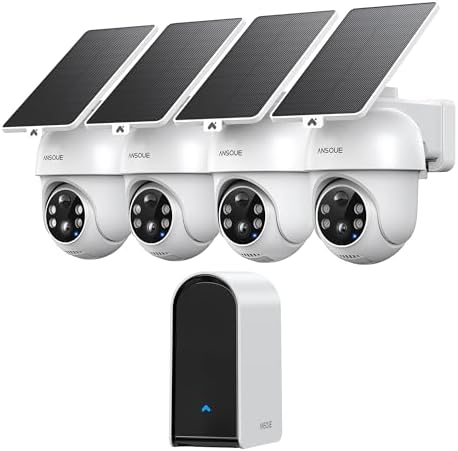
Best for a whole perimeter: ANSQUE Solar Powered 4-Cam System
This is the one I would point at a house where running cable is simply off the table. It is a four-camera wireless outdoor system, and every camera is solar powered, which is the part that matters most to me. Solar means no ladder every few months to swap batteries, no trenching across a lawn, and no new hole in your siding for a coax line.
Four cameras on one system is also the right number for most properties: one on the driveway, one on the front door, one on the side gate, one covering the back slider. The break-in I lived through happened on a side door that no camera watched. A single doorbell camera would not have changed that night.
What the listing will not answer for you is where the footage lives, and that is the question I would settle before buying. If recordings land in a cloud plan, price that plan out for three years and write the number next to the hardware cost. Wireless also means your Wi-Fi range matters. If the garage sits at the far end of the house, confirm your signal actually reaches the mounting point first.
Best wired value: 180 Degree Fisheye Dome Camera
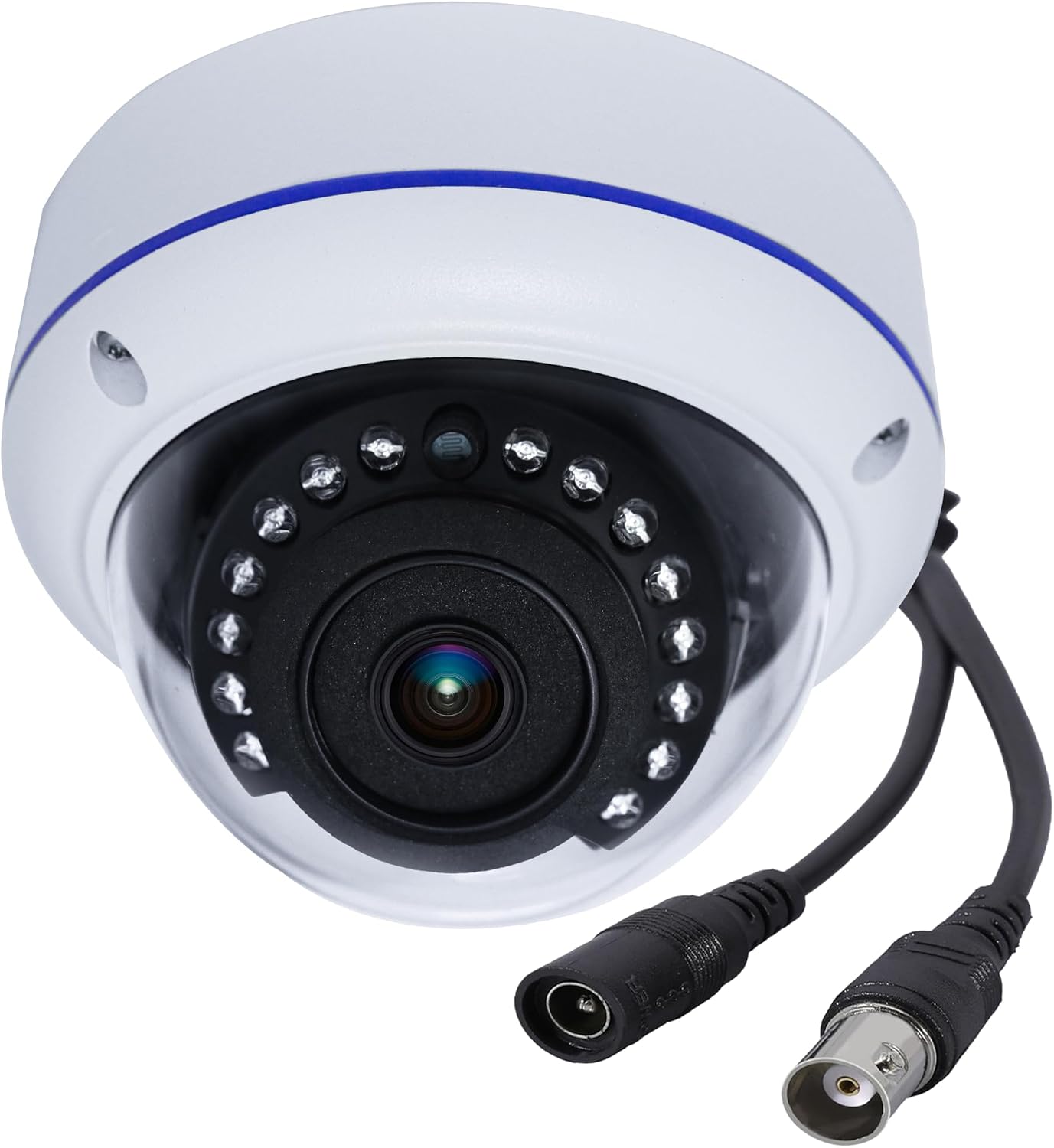
Some houses want a system. Some houses want one camera that sees everything at once. This dome is the second kind. It is a wired coax camera with a 1.7mm fisheye lens and a 180 degree field of view, which means a single mount can watch an entire side yard, a corner of a driveway, or a long narrow strip where two normal cameras would fight over angles.
It is a 4 in 1 hybrid analog camera, so it speaks TVI, AHD, CVI, and plain BNC. Translation: it plugs into a DVR, not your Wi-Fi. That is a feature if you already run coax or you are willing to pull it, and a dealbreaker if you are not. There is no app here, no subscription, and no vendor sitting in the middle of your footage.
The tradeoffs are real. A 180 degree view stretches everything toward the edges of the frame, so a face at the far left is not the same as a face dead center. It is also 1080P, which is plenty for a wide shot but leaves less room to crop than a higher resolution sensor. Mount it where the wide view is the whole point, not where you need a tight ID shot across a parking lot.
Infrared is the other thing to think about. IR is what turns a cheap camera into a glowing raccoon blur at 12 feet. Point a dome at a nearby wall or fence post and you get washout. Aim it down a long driveway and it does what infrared is supposed to do.
Best single camera to start with: 5MP Smart Camera with Full Colour Night Vision
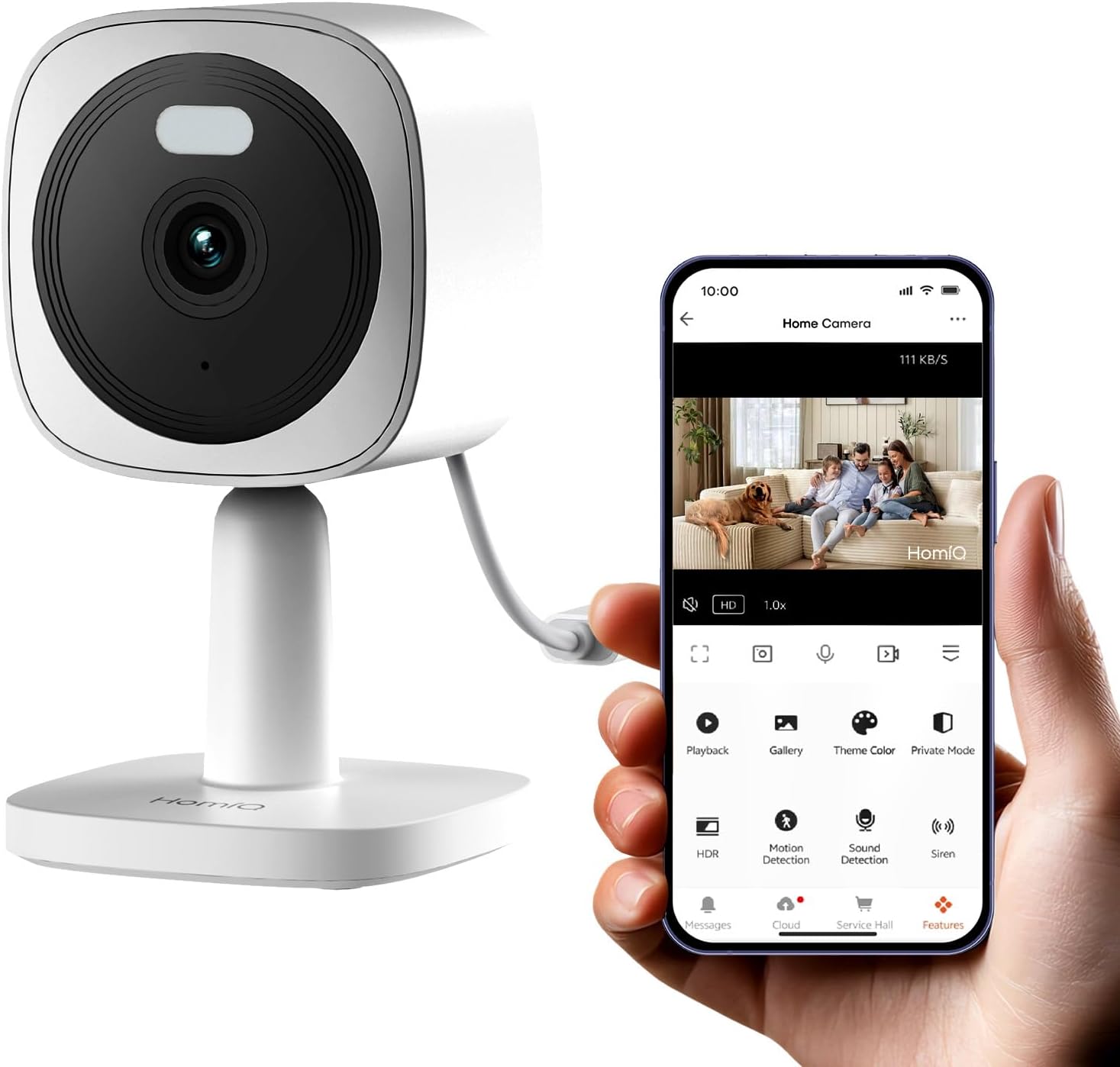
Full colour night vision is the headline, and it is worth understanding what that phrase usually means. Instead of turning the world into black and white infrared, the camera keeps colour after dark, typically by pairing the sensor with a light source. Colour matters more than people think. A grey jacket in IR is still a grey jacket. A red jacket in colour is a red jacket, and that is the kind of detail an investigation can actually use.
5MP resolution is the other half of the pitch. More pixels means more room to crop a frame and still have something usable, which is exactly what you want when your camera covers a driveway and the person you care about is 30 feet out.
The word "smart" is where I would slow down. Smart usually means app notifications plus some form of person detection. Person detection is only useful if it works at 2 AM, not just in daylight, and the only way to know is to live with it for a week and count the alerts. Set tight detection zones from day one. A camera that fires on every passing car is a camera you mute by Thursday, and a muted camera is a camera that does not exist.
The odd one out: SUNPOW Metal Detector Pinpointer
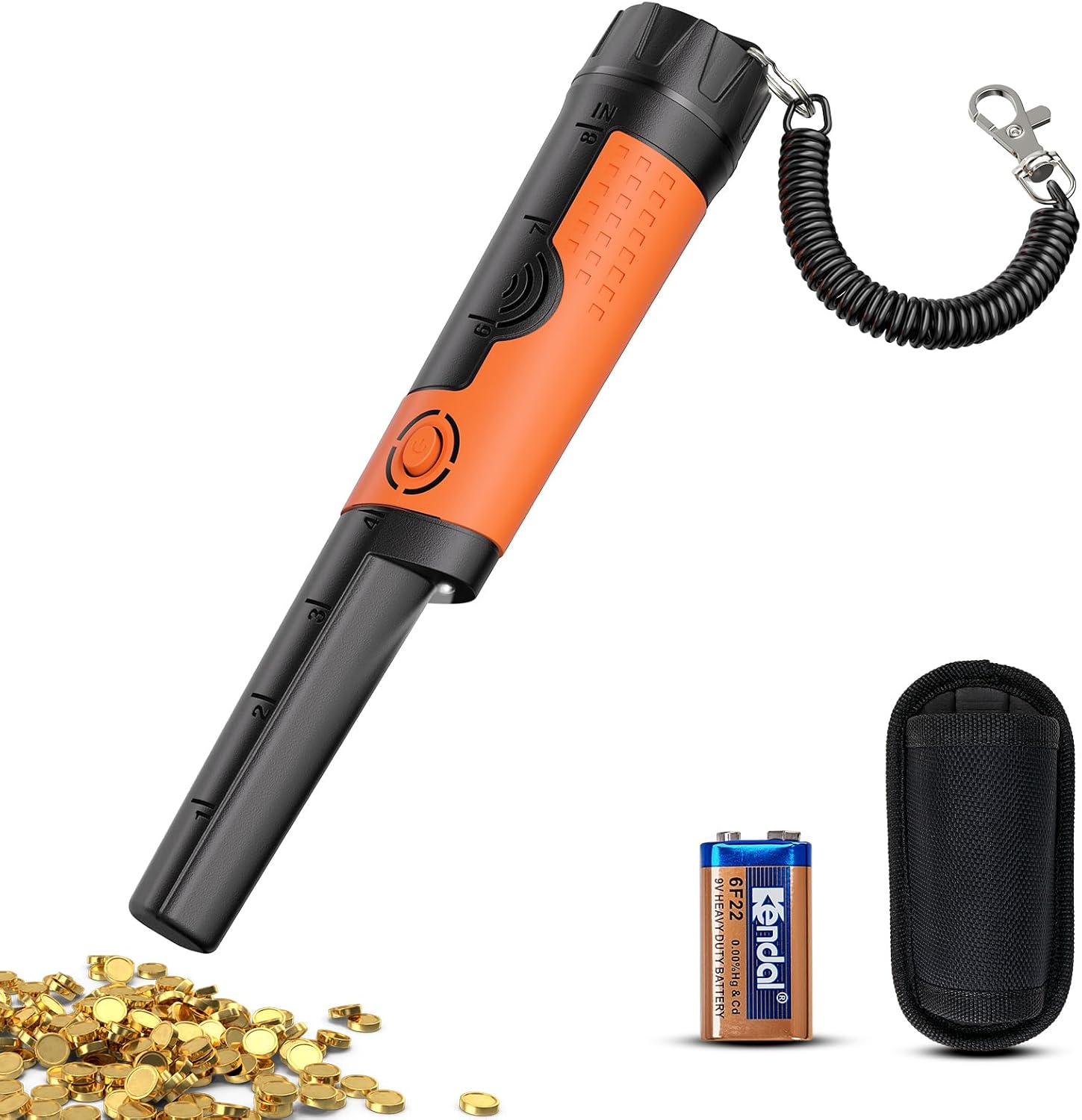
This is not a camera, and I am including it on purpose. A waterproof handheld pinpointer with 360 degree detection and two alert modes is the tool I want in my hand before a shovel goes into my yard. If you have ever buried coax, an irrigation line, or a run of landscape stakes, you know the specific dread of not being sure exactly where it is.
The pitch is simple: high sensitivity, handheld, waterproof, easy enough for kids to use on a treasure hunt. The homeowner use is less glamorous. It finds rebar stakes, buried sprinkler heads, lost shed keys, and dropped screws in tall grass before you dig a hole through something expensive. If you are planning a wired camera install, you are going to be digging. Locate your lines first.
It is not a substitute for calling 811 before you dig, and it is not a stud finder. It is a pinpointer. Know what it is and it earns its shelf space in the garage.
How I test a camera before I recommend it
I mount every camera on my own garage and back fence for a full week and run the same four tests.
Night face ID at 10, 20, 30, and 50 feet. I stand at each mark and ask whether the resulting clip would let a stranger pick my face out of a lineup. Everything inside that range is evidence. Everything past it is decoration.
False alerts, counted. I keep a running tally for seven days of every notification that was not a person: raccoons, shadows, headlights, a spider building a web in front of the lens. One camera in my log produced more alerts in a week than my entire neighborhood watch group produced in a month.
Three-year cost math. Hardware plus the cheapest plan that makes the camera useful, multiplied by 36 months. I write that number next to the sticker price, because the subscription is the real price and the hardware is only the down payment.
Where the footage lives. SD card, NVR, or cloud. I want the answer to be something inside my house, because a clip that lives in someone else's data center is a clip I do not fully control.
The comparison table
Here is the same information in one place. Every row is built from what the listing actually promises, and the last column is where each one fits.
| Product | What it is | Wired or wireless | Night vision | Where it fits |
|---|---|---|---|---|
 Visit on Amazon → Visit on Amazon →ANSQUE Solar 4-Cam System |
Four-camera outdoor system | Wireless, solar powered | Check the listing | Whole-perimeter coverage when you cannot run cable |
 Visit on Amazon → Visit on Amazon →Fisheye Dome Camera |
Single dome, 180 degree fisheye, 4 in 1 hybrid analog | Wired coax, needs a DVR | IR night vision | One mount covering a wide side yard or driveway edge |
 Visit on Amazon → Visit on Amazon →5MP Smart Camera |
Single smart camera | Check the listing | Full colour | A door, driveway, or single entry point |
 Visit on Amazon → Visit on Amazon →SUNPOW Pinpointer |
Handheld pinpointer, not a camera | Handheld | Not applicable | Finding buried lines and stakes before you dig |
Two cells say "check the listing" on purpose. I will not print a power spec or a storage detail I have not verified, and you should not buy on one either.
What the table actually tells you
The first decision is not brand, it is wiring. If you own the house and plan to stay, coax into a DVR gives you the cleanest deal in this category: no subscription, no app, no vendor, and footage that sits in your own closet. The fisheye dome is the cheapest way to test that path, and its 180 degree view means one cable run can cover an area that would otherwise need two cameras.
If you rent, or you are moving in two years, or your yard is the kind of yard where trenching would require a permit and a marriage counselor, the solar four-camera system is the sane answer. You trade a wiring project for a dependence on Wi-Fi and, most likely, an app. That is a fair trade. Just price the app before you buy the cameras.
Resolution is the spec everyone quotes and the one that matters least at night. A 5MP sensor with full colour night vision gives you more pixels to crop and a better chance of colour detail after dark. A 1080P fisheye gives you a wider view with fewer pixels per face. Neither number tells you whether the camera can ID a person at 20 feet at 2 AM. Only a week of clips tells you that.
And the pinpointer belongs in the same conversation because every wired install starts with a shovel and a guess. Find the line first. Then mount the camera.
Should you buy the ANSQUE Solar 4-Cam System?
Yes, if you cannot run cable and you want four viewpoints on one system. Solar power removes the two chores that kill wireless camera setups: swapping batteries and remembering to swap batteries. Four cameras covers the four places a break-in actually happens, including the side door nobody thinks about until it is the door that gets pried open.
Before you buy, answer the storage question and the Wi-Fi question. Those two answers decide whether this system is a bargain or an ongoing bill.
Should you buy the fisheye dome?
Yes, if you already have a DVR or you are ready to run coax, and you want one camera to cover a wide arc. It is the no-subscription path, and a 180 degree lens is genuinely useful on a side yard where two normal cameras would leave a gap between them.
Skip it if you want an app on your phone and nothing else. This camera wants a recorder, and no amount of wishing changes that.
Should you buy the 5MP smart camera?
Yes, if you are starting with a single entry point and you care about colour detail after dark. 5MP gives you room to crop, and full colour night vision is the difference between "a person in a dark jacket" and "a person in a red jacket."
Set your detection zones tightly on day one and check the false alert count after a week. If you are not willing to do that, buy the wired option instead, because a camera you mute protects nothing.
Should you buy the pinpointer?
Yes, if you are about to dig in your own yard, whether for a camera run, a fence post, or an irrigation line. It is a small tool that prevents an expensive mistake, and it doubles as a genuinely fun thing to hand a kid in the backyard.
It is not a camera and it is not a substitute for calling 811. It is the step before the step, and that step is where installs go wrong.