At 3:07 AM on a Tuesday in February, someone pried open the side door of my garage and walked out with two bikes, a toolbox, and my late father's camping gear. I had bought a camera the week before, from a deals email, because it was cheap and the listing promised crystal-clear night vision. It recorded 22 minutes of a blurry raccoon and a dark shape that never once became a face. The detective was polite about it: no face, no case. Insurance watched the raccoon too, then denied most of the claim.
That night is the reason this site exists, and it is why any home security camera system I recommend has to answer one question before anything else: can it put a face in front of a detective at 20 feet, at 2 AM, in the rain? Channels, battery life, app polish, and channel count are all secondary to that single test.
Since then I have mounted cameras on my own garage and back fence, logged the results in a notebook I call The Garage Log, and become the person my neighborhood watch group texts at 11 PM. So here is the honest comparison of the four systems people keep asking me about in 2026: two wired NVR kits, one battery camera set, and one camera built for a single job.
If you want the best home security camera system for a typical house, the Reolink 16-channel 4K kit with the 4TB drive is the one I would put my own money on, because the cameras are actually 4K, the footage lives inside your house, and nobody can charge you a monthly fee to watch your own driveway.

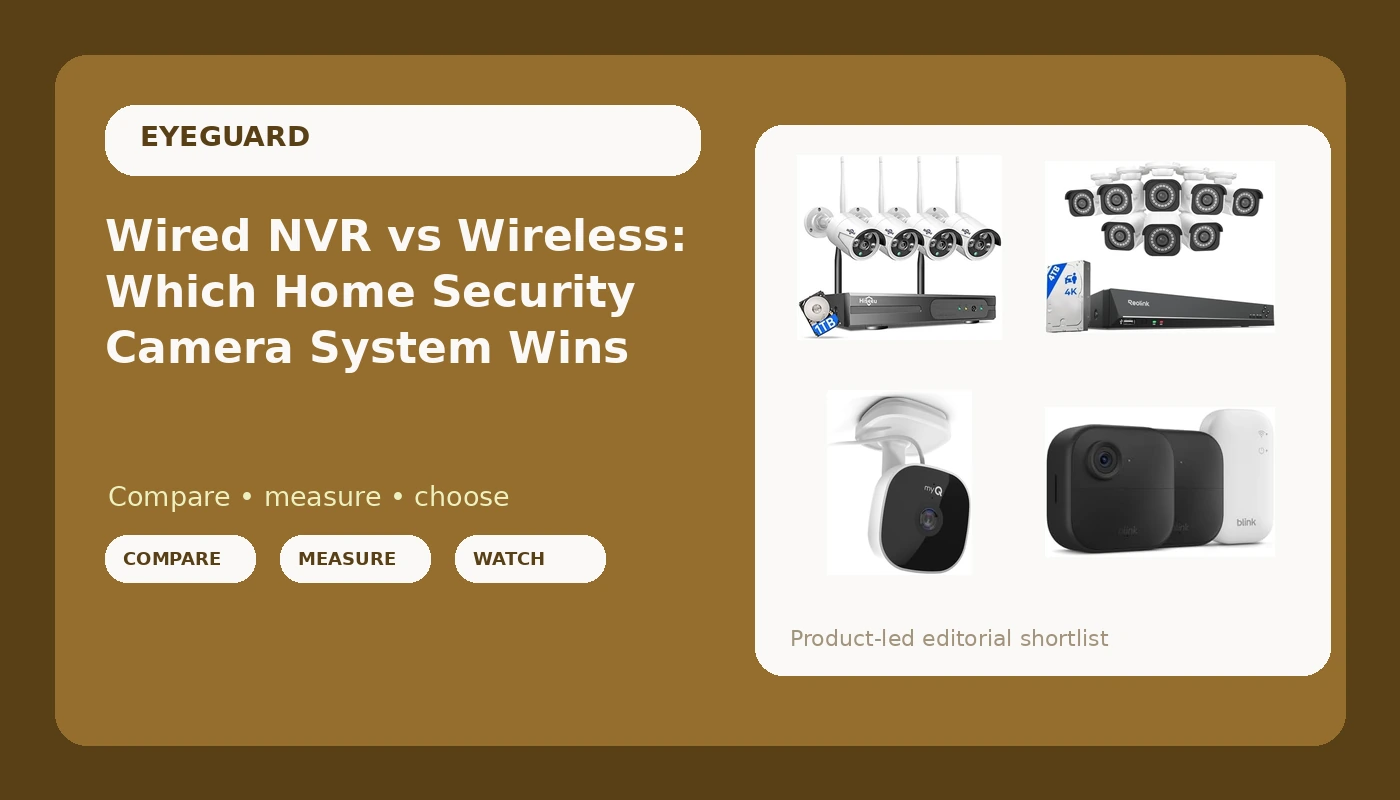
REOLINK 16CH 4K Security Bullet Camera System with 4TB HDD RLK16-800B8
True 4K bullets recording to a 4TB drive in your own house, 16 channels to grow into, zero cloud dependency
You are drilling holes and running cable, and there is no version of this that is a weekend afternoon for a renter
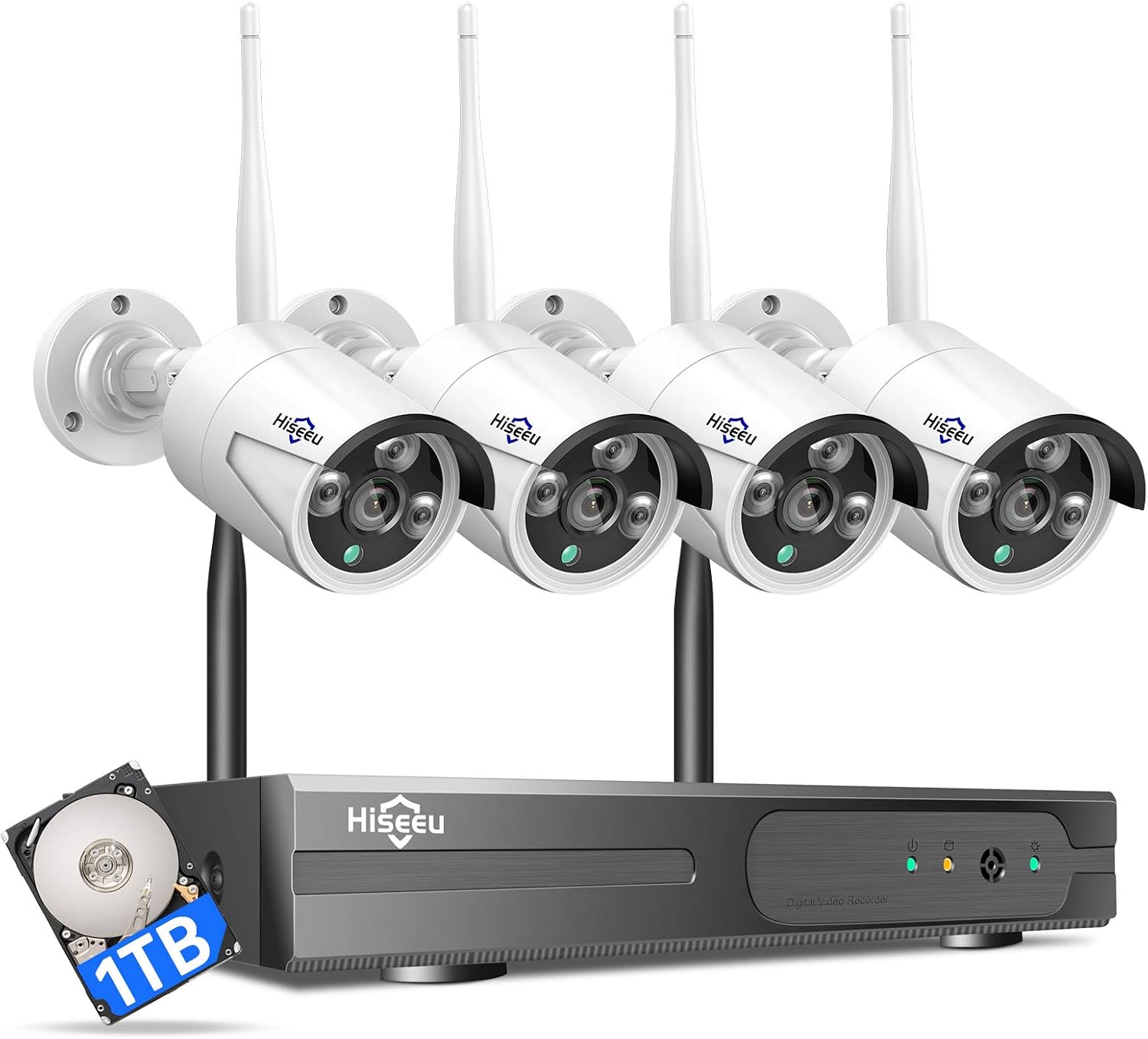
[100ft] Hiseeu Wireless WiFi Security Camera System, Wired Plug-in Powered, Expandable 16CH 4K NVR, 4Pcs 3MP Night Vision Cameras Home Surveillance Outdoor, Motion Detection, 1TB HDD, One-Way Audio
Lowest entry cost into a 16-channel NVR, 1TB drive already installed, 100 feet of cable in the box
The bundled cameras are 3MP, not 4K, and the audio only goes one direction
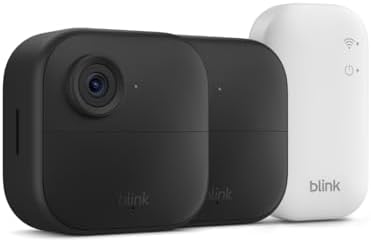
Blink Outdoor 4, Wireless smart security camera, two-year battery life, 1080p HD day and infrared night live view, two-way talk. Sync Module Core included, 2 camera system
Install it in 20 minutes with no wiring, two-year battery life, two-way talk, Sync Module Core included
1080p is roughly a quarter of the pixels of 4K, and battery cameras record events, not continuous evidence
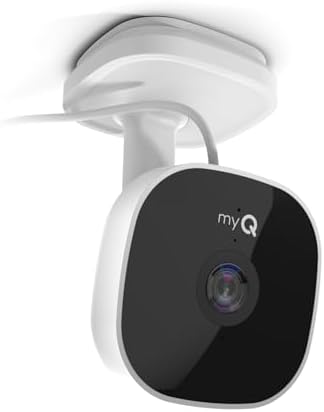
myQ Smart Garage Security Camera, 1080p HD Video, Night Vision, Motion Detection, Magnetic, Wi-Fi, Two-Way Audio, Smartphone Control
A magnetic camera that aims exactly where the break-in happens, with two-way audio and simple phone control
It covers one room, at 1080p, and it is a companion rather than a system
Prices and availability were captured from Amazon Creators API and may change.
How I judge a camera before I recommend it
Four questions, in this order.
First, night ID range. Not "night vision," which every box claims, but the distance at which the camera still resolves a face you could hand to a detective. Targets at 10, 20, and 30 feet tell you more than any spec sheet, because most cheap cameras blow out everything inside 15 feet while trying to light up the end of the driveway. That washout is why my raccoon footage was useless.
Second, the real three-year cost. Hardware is the down payment. If the useful features sit behind a monthly plan, I want that number printed next to the purchase price before I call anything a deal.
Third, where the footage lives. A drive in your house cannot be quietly deleted by someone else's legal request, and it does not stop working when your internet does.
Fourth, false alerts. A camera that pings you for every car, shadow, and spider web gets muted by week two, and a muted camera is not security. It is a blinking LED.
The wired kits: Reolink and Hiseeu
These two are the same idea executed at two different budgets, and the gap between them is wider than the price suggests.
REOLINK 16CH 4K with 4TB HDD
This is the system I would install on my own house tomorrow. Sixteen channels means you buy it once and add cameras for years instead of replacing the whole brain. The bullets are 4K, which matters because pixels are what a face is made of at distance; a 4K frame gives you roughly four times the detail of 1080p in the same field of view. And the 4TB drive sits in your house, recording locally, with no subscription between you and your own footage.
The honest downside is labor. Wired means drilling, fishing cable, and deciding where the NVR lives before you own a single camera. If you rent, or if your garage is on the far side of a concrete slab, this is a project, not a purchase. How many days of retention 4TB buys you depends entirely on camera count and whether you record continuously, so plan the drive around the footage you actually want to keep.
Hiseeu 16-channel kit with 1TB HDD
The Hiseeu kit is the budget door into the same 16-channel world, and it comes with 1TB of storage and 100 feet of cable in the box. It is also where the marketing language needs translating.
"Wireless" here describes the video link between camera and recorder, not the power. Every camera is plug-in powered, so each one still needs an outlet or an extension, and that constraint decides your mounting plan just as much as the cable does. The other thing to notice: the NVR is 4K-capable, but the four bundled cameras are 3MP. That is not a disaster, it is a trade, and it means the weak link in this system is the sensor on the front of the camera rather than the recorder in the closet. One-way audio is the other compromise; you can hear what happens outside, but you cannot talk back through the camera.
For a first system on a tight budget, with room to upgrade the cameras later, that is a defensible deal.
The wireless pick: Blink Outdoor 4
The Blink Outdoor 4 two-camera system is the answer for everyone who read the Reolink paragraph and thought "I am not running cable through my house." Two-year battery life on the manufacturer's spec, 1080p day and infrared night live view, two-way talk, and the Sync Module Core included so the pair works out of the box. Twenty minutes with a ladder and you are done. For a renter, or for a house where the only mounting spot has no outlet within reach, that convenience is the entire argument.
Two caveats, and they are the same caveats I apply to every battery camera.
The first is resolution. 1080p is about a quarter of the pixels of 4K, and at 20 feet at night, pixels are the difference between a face and a shape. The second is that battery cameras are event cameras by design; they wake, they clip, they sleep. That is fine for knowing a package arrived. It is a weaker answer to "show me everything that happened between 2 and 4 AM."
And do the plan math before you buy, because with battery cameras the feature set and the storage question are usually tied to a subscription. Check what the camera does with no plan at all, then decide.
The garage specialist: myQ Smart Garage Security Camera
This one is not competing with the NVR kits, and it should not be judged as if it were. It is a 1080p camera with night vision, motion detection, two-way audio, and a magnetic body that sticks to a garage door opener or any steel surface you point it at, controlled from your phone.
Here is why it earns a place in this comparison anyway: the garage is where the break-in happens. Not the front door with the wreath, not the hallway. Mine was a side door into a garage, and the myQ camera's magnetic mount means you can aim it at exactly that door, or at the space where the bikes live, without a single screw. Two-way audio is genuinely useful there, because half of garage crime is opportunistic, and a voice from nowhere is a real deterrent.
The limitation is scope. It is one room, at 1080p, and it is a companion to a system rather than a replacement for one. Same plan question as Blink: confirm what works without a subscription before you commit.
The trade-offs nobody prints on the box
Wires versus batteries. Wired cameras never miss an event because they never sleep, and they never ask you to climb a ladder in January. Battery cameras install anywhere and record events only. Pick based on whether you want a record or a notification.
Local versus cloud. The Reolink and Hiseeu kits write to drives in your house. That is the model I trust, because your footage cannot be deleted by anyone with a legal request and a support ticket.
Resolution versus camera count. Four 3MP cameras cover more ground than two 4K cameras. But coverage without identification is how you end up handing a detective a raccoon.
Audio direction. Two-way audio lets you talk to whoever is at the door or under the carport. One-way audio only lets you listen, which is useful for evidence and useless in the moment.
Who does the work. This is the real dividing line in this table. The Blink set is a renter's answer, the myQ is a single-evening answer, and both NVR kits are a weekend with a drill, a fish tape, and somebody holding the other end of the cable.
Which one for which house
Buy the Reolink 16CH 4K system if you own the house, you are willing to run cable once, and you want 4K evidence stored on your own 4TB drive. It is the closest thing here to a system that holds up in an actual investigation.
Buy the Hiseeu 16-channel kit if you want 16 channels and local storage at the lowest entry cost and you accept 3MP cameras with one-way audio as the compromise. Upgrade the cameras later; the recorder stays.
Buy the Blink Outdoor 4 two-camera system if wiring is off the table. You are trading resolution and continuous recording for an install you can finish before dinner.
Buy the myQ Smart Garage Security Camera if your garage is the soft spot, which it probably is. Point it at the side door and stop pretending the front porch is the target.
I have one rule I do not bend on, and it comes straight out of The Garage Log: a camera that cannot identify a face at 20 feet at night is not security, it is decoration with a blinking LED. Match the system to the job, mount it correctly, and make sure the footage lands somewhere you control. That is the whole game.