Related: Security Cameras Without a Subscription: What Actually Works
On a Tuesday at 3:07 AM last February, someone pried open the side door of my garage in Seattle and walked out with two bikes, a toolbox, and my late father's camping gear. The camera I had bought the week before from a deals email recorded 22 minutes of a blurry raccoon and one dark shape that never became a face. The detective was kind about it: no face, no case. Insurance watched the raccoon, then denied most of the claim.
That is the whole reason this site exists, and it is why the wireless home security cameras in this guide get judged the same way. Not by megapixels. Not by the box. By whether the footage would have been worth handing to a detective.
The four cameras below cover four different jobs: a full perimeter kit, a value pair for a door and a side yard, a small indoor camera you can run without a subscription, and a single battery camera for the spot with no outlet. Prices move constantly, so every link here goes straight to the product page where the current number lives. What I care about is the part that does not move: night ID range, false alerts, and where your footage actually ends up.
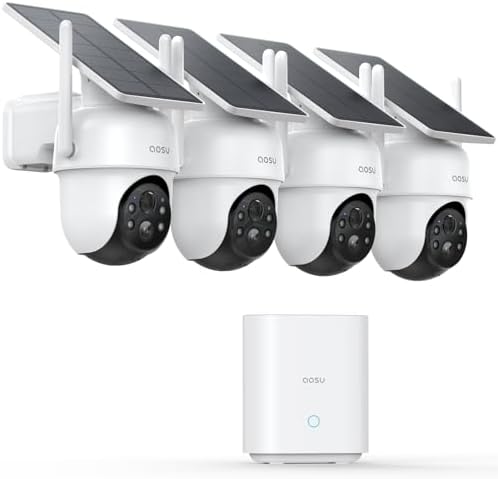
Best for a Whole Perimeter: aosu D1 Classic 4-Cam Kit
If you have more than one blind spot, this is the kit that addresses them all at once: four wireless outdoor cameras with solar panels, which means no trenching, no outlet hunting, and no ladder every few months. My garage has one door and one driveway, and I still want three angles on it, because the angle my old camera had was the one angle the thief avoided. Four cameras mounted sensibly beat one camera mounted perfectly.
The solar part matters more than people expect. A wireless camera is only wireless until its battery dies, and a dead camera recorded nothing. If each unit trickles a charge all day, you stop thinking about it. That is the difference between a security system and a weekend project.
Two things to verify before you buy this kit. First, where the footage lives. A four-camera kit gets its value from recording all four feeds somewhere you can actually review them, and I want that somewhere to be a base station or a card in my house, not a plan. Second, clip length when the camera wakes on motion. A camera that saves eight-second clips is a camera that misses the second the door opens.
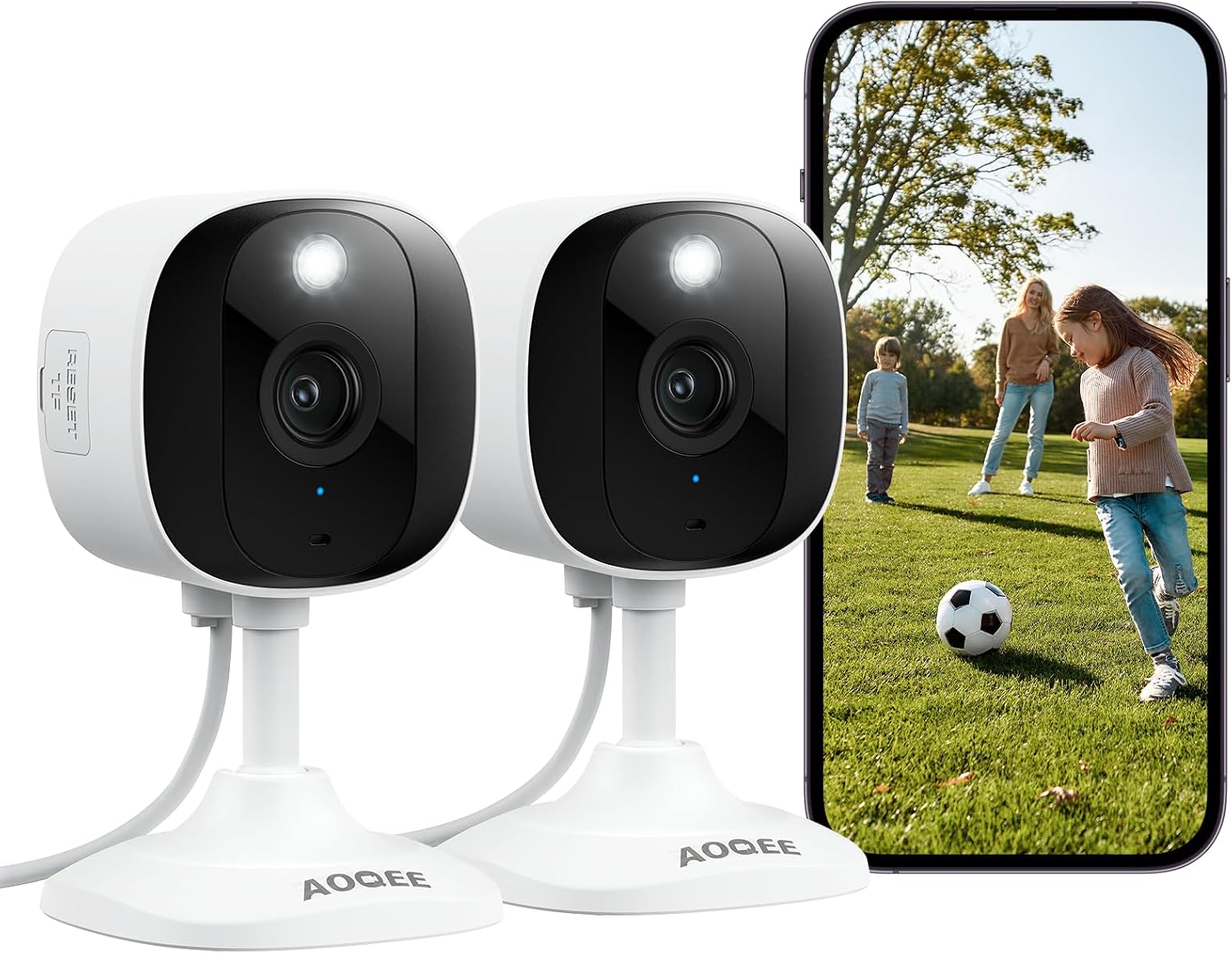
Best Value Pair: AOQEE 2K Cameras, C1 2-Pack
Two cameras, indoor or outdoor, 2K, full color night vision. That combination at the affordable end of the market is why this pair is here at all: most people's first camera should not be their only camera, and buying one at a time is how you end up with a single camera aimed at the wrong corner of the yard.
2K matters, but not the way the boxes imply. Resolution tells you how much detail sits on the sensor. It does not tell you how much of that detail survives the lens at 2 AM. A 2K camera with wide glass and aggressive infrared will hand you a bright, detailed, unidentifiable blob. I would rather have 2K at 20 feet with a sober exposure than 4K at 40 feet with IR washout.
Full color night vision is the other line to read carefully. It usually needs either ambient light on the scene or the camera's own light switching on. That can be exactly what you want over a driveway, because color helps you describe a car or a jacket. It can also be the last thing you want, because a light snapping on announces your camera to anyone standing there. Check whether you can force plain infrared mode, and decide per camera.
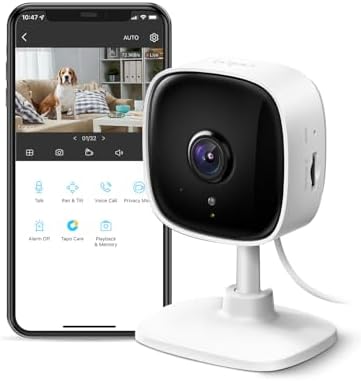
Best Indoors: TP-Link Tapo C100
Indoor cameras live in a different world from the ones on the fence. Nobody is walking 40 feet through your living room, so the distance problem mostly disappears, and the question becomes whether the camera keeps a useful record without billing you every month.
This is the camera in this group that does the most double duty: baby monitor, dog camera, front window cam pointed at the driveway. It adds two-way audio and a siren, which people underestimate until the day they want to talk to whoever is in the room or scare off a dog on the porch. It works with Alexa and Google Home if that matters to your setup.
Storage is the part I care about. This one takes an SD card as well as cloud storage, and a camera that can write to a card in your own house keeps working after you cancel a plan. That is the difference between a cheap camera and a cheap camera plus a subscription forever. Confirm the playback from the card works without a plan before you assume it, because that is exactly the kind of feature some brands quietly move behind a paywall.
1080p indoors is fine. Short distances, controlled light, faces close to the lens. Spend your resolution budget outdoors.
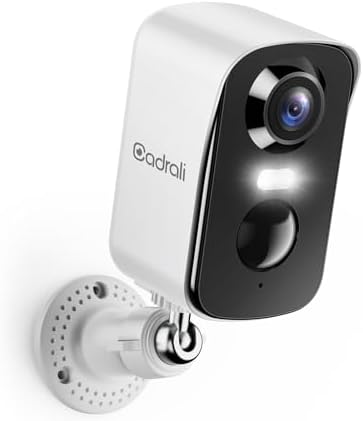
Best Single Outdoor Camera: 2026 Upgraded 2K Outdoor Camera Wireless
Not everyone needs a kit. If you have exactly one spot that worries you, a shaded fence line with no outlet anywhere near it, this is the shape of camera to look at: wireless, 2K, battery rated for one to six months, full color night vision, motion alerts, two-way audio, IP65 weatherproofing.
The battery rating is where you do your own math. One to six months is a range, and it is a range because runtime is a function of how often the camera wakes up. A camera facing a street, a sidewalk, and a swaying tree will wake constantly and land near the bottom of that range. A camera watching a back gate wakes a handful of times a week and lands near the top. Point it at a choke point, not at the world.
This is also the camera I would choose over a solar unit when the spot sits under a roof overhang or a deep canopy most of the day. Solar panels need light, and a panel in permanent shade is a decorative lid on a battery that still dies.
How I test
I mount every camera at the same height on my garage and back fence, then run targets at 10, 20, 30, and 50 feet after dark. The question at each distance is not whether I can see a person. It is whether I could describe the person: face, build, clothing, anything a detective could work with. Everything inside the range where a face holds up is evidence. Everything past it is decoration, and decoration is what most marketing photos actually show you.
Then the camera stays up for a week and I log every alert. Not glance at the alerts. Log them. Cars, cats, raccoons, spiders on the lens, my neighbor's porch light, rain on the housing. The false-alert tally decides whether a camera stays, because a camera that pings forty times a day is a camera everyone in the house mutes by Thursday. A muted camera is not security. It is a blinking LED.
I also price every camera three years out, hardware plus whatever the useful features require. If person detection or playback lives behind a plan, that plan goes in the math. The subscription is the real price. The hardware is the down payment.
What the specs do not tell you
Four questions decide this category, and not one of them is printed on the box.
Where does the footage live? A card or a base station in my house wins, every time. Cloud is a convenience and a liability at once: someone else holds the clips, someone else sets the retention, and someone else decides whether the file still exists next month.
What does it cost over three years? A cheap camera with a mandatory plan is an expensive camera. A slightly pricier camera with a card slot can be genuinely free after purchase.
Does person detection work after dark? This is the part people skip. Motion detection that flags every passing car is annoying by day and useless at night, and it is the reason half the cameras in America are pointed at nothing and muted.
Would I hand that clip to the police? That is the last filter. If the answer is no, the camera is a comfort object.
Two practical notes on top of that. Buy for the choke point, not for the wall: the driveway, the side gate, and the back door are where the odds live, and a camera covering open lawn is a camera covering nothing. And mount it correctly, high enough to be out of arm's reach but low enough to catch a face at a useful angle, because a perfect camera aimed down at the top of a head proves nothing.
The camera reference table
This is the table I keep in the same notebook as the false-alert logs, the one I open whenever a neighbor asks what to buy. It sorts the four cameras by job, not by marketing tier. Verify the storage column on the product page for your model before you commit, because the answer changes what the camera really costs.
| Camera | Mount it here | Footage storage | The honest caveat |
|---|---|---|---|
 Visit on Amazon → aosu D1 Classic 4-Cam Kit |
Driveway, side gate, back fence corners | Verify whether all four feeds land on a local base or need the plan | Four angles from one purchase, and solar means no ladder. Solar also needs sun |
 Visit on Amazon → AOQEE 2K C1 2-Pack |
Front door, side yard, garage interior | Check whether there is a card slot and wether playback needs a plan | Two angles for a value price. 2K is only as good as the lens and the exposure |
 Visit on Amazon → TP-Link Tapo C100 |
Nursery, dog crate, living room window | SD card or cloud, and the card keeps working if you cancel | 1080p is plenty indoors at short range. It is not an outdoor ID camera |
 Visit on Amazon → 2026 Upgraded 2K Outdoor Camera Wireless |
Shaded fence line or back gate with no outlet | Verify the card slot and the clip length on a motion wake | Battery life is a range. Every false alert spends some of it |
The pattern in that table is the argument of this whole guide. The cameras that earn a spot are the ones where the footage stays in your house, the detection stays quiet, and the owner stops thinking about batteries. That is it. That is the category.
Should you buy the aosu D1 Classic 4-Cam Kit?
Yes, if you have more than one blind spot and no interest in running cable. Four cameras on solar is the shortest path from "I should get cameras" to "the perimeter is covered", and it removes the two reasons wireless cameras fail: dead batteries and cameras that never get mounted at all.
Verify two things on the product page: how the kit stores footage, and how long a clip runs when motion wakes it. If storage is local and clips are long enough to hold a full event, this is the kit I would put on my own garage. And be honest about your yard. Solar needs light, so if every corner you care about sits in permanent shade, plan for battery maintenance or a different approach entirely.
Should you buy the TP-Link Tapo C100?
Yes, for indoors. It is the smallest commitment here and the one most people will actually use: a nursery, a dog, a front room window aimed at the driveway. Two-way audio, a siren, night vision, and a card slot so the footage can live in your house if you want it to.
The limits are real. It is 1080p, which is fine across a living room and not enough to identify a face at the end of a driveway. Keep it inside, set tight detection zones so it stops pinging at the cat, and it earns its spot.
If your budget is the binding constraint and you have two places to watch, the AOQEE pair covers more ground per dollar than anything else here. If you have one lonely spot with no outlet and no sun, the 2026 battery camera is the one to look at. Whichever you choose, mount it where a person has to pass, and pick one that will still be awake in six months. The raccoon footage taught me that the hard way.