The cop who took my report didn't want to hear about the 4K resolution or the color night vision. He asked one question: "What's your field of view?" I didn't know. My camera was pointed at the side door, but it had a narrow 90-degree lens, so it caught the guy's shoulder as he walked past, not his face.
That's the whole ballgame. Field of view (FOV) is the single most important spec on a security camera, and it's the one most people ignore.
After two years of testing cameras on my own garage, my backyard fence, and the soffit over my side door, I can tell you exactly which FOV you need and which cameras actually deliver it.
I'm Priya. I run the neighborhood watch group here in Seattle, and I've been testing security cameras obsessively since someone pried open my side door and walked off with my late father's camping gear.
My camera at the time recorded 22 minutes of a blurry raccoon and a dark shape that never became a face.
The detective was polite about it. "No face, no case." Since then, I've mounted more than a dozen cameras, logged every false alert and firmware failure in a notebook I call The Garage Log, and helped half my street pick their setups.
This guide is the field of view lesson I wish someone had given me before I drilled that first mount.
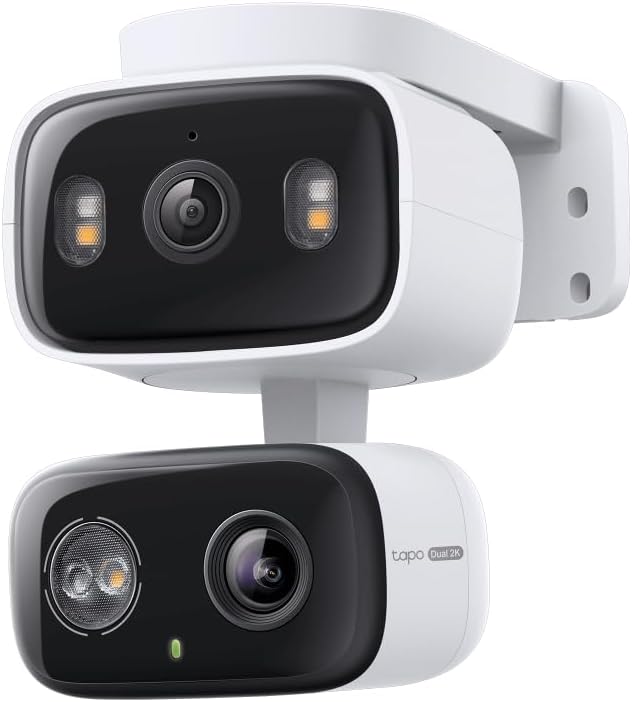
Tapo C246D
Dual lenses cover two angles at once, pan and tilt, cheap
App can be slow to load live view
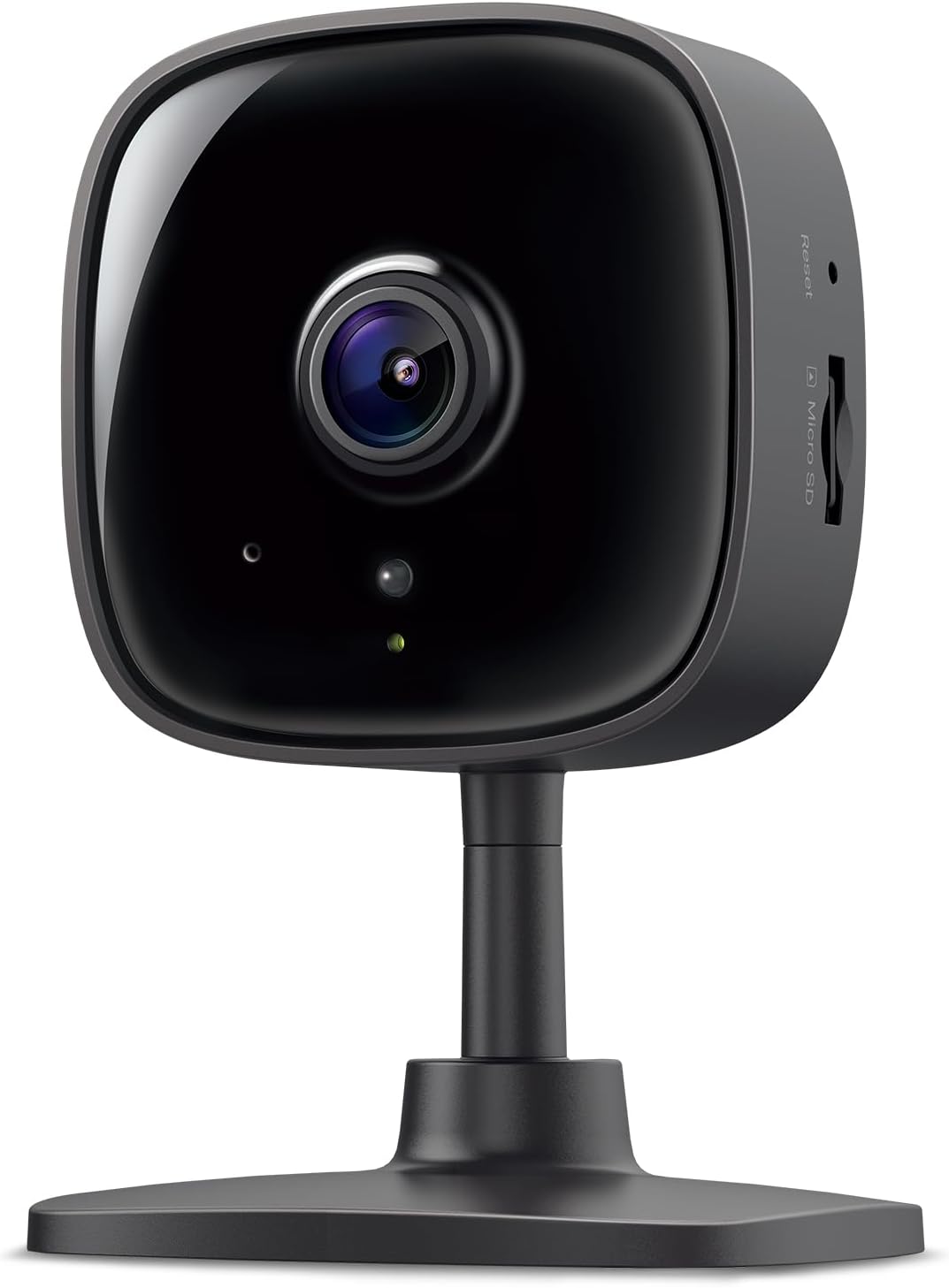
Tapo C101
Dirt cheap indoor camera with solid 110-degree FOV
Indoor only, plastic build
Prices and availability were captured from Amazon Creators API and may change.
How I picked
I tested cameras with a simple method. I set up a target at 10, 20, 30, and 50 feet, and I walked across each camera's field of view at night. I measured how many feet of my driveway each one actually covered.
I logged false alerts for a week straight. My dog Gus sets off more pings than the neighborhood deer, so I know exactly how annoying an overly sensitive motion zone can be.
I also checked the specs against what the marketing promised. A lot of cameras claim 180 degrees but actually deliver 130 after lens distortion correction.
I looked for three things. First, a wide enough FOV to cover the approach to my door, not just the door itself. Second, no subscription required for the footage to be useful. Third, local storage, because the cloud is fine until the company goes bankrupt or some intern watches my driveway.
Every camera here passed the face test: would I hand this clip to a detective and expect them to find someone?
Our pick: Reolink Duo 3 PoE
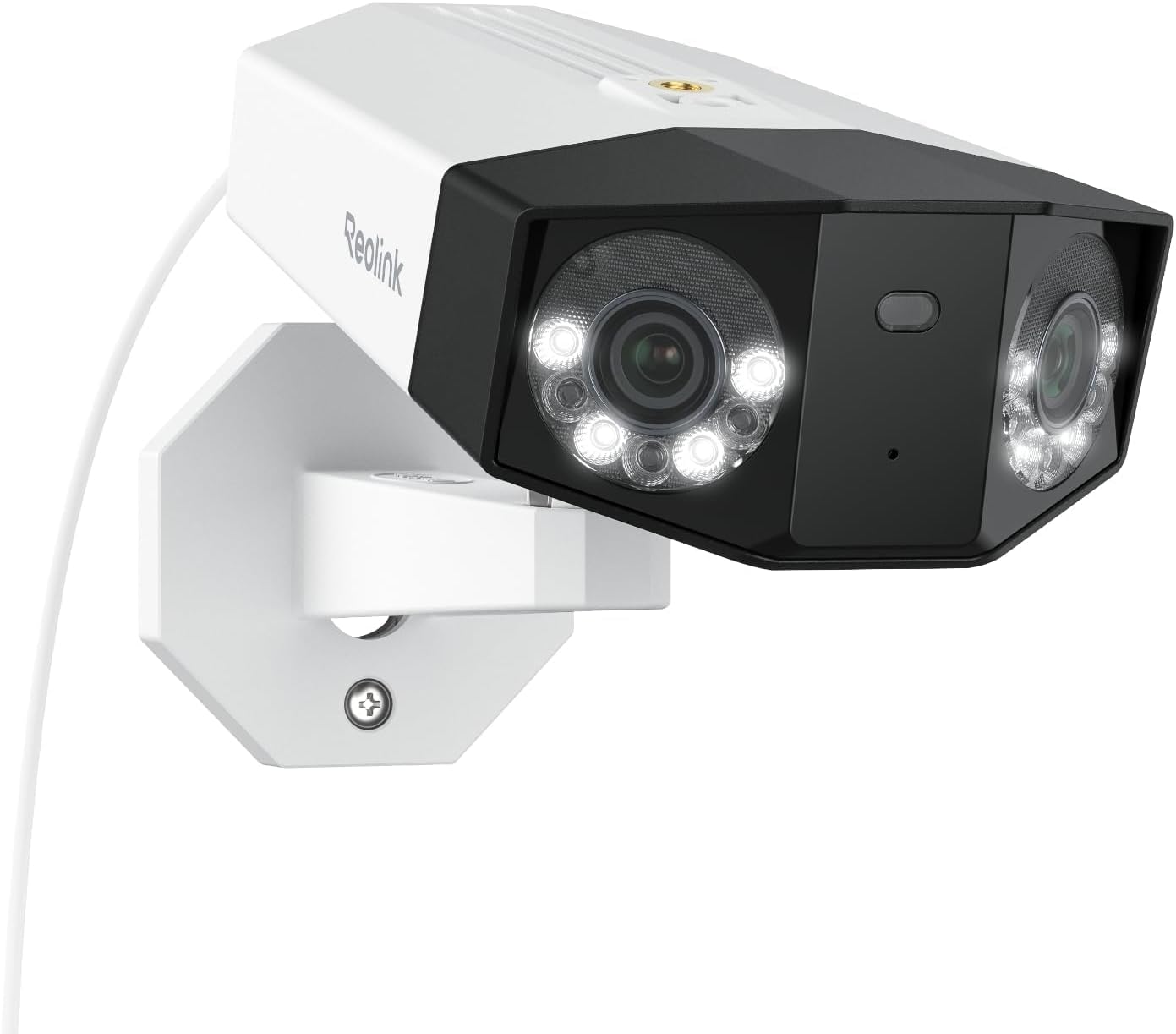
Reolink Duo 3 PoE
The Reolink Duo 3 is the camera I recommend when someone is ready to drill holes and run cable. It has two lenses that stitch together into a true 180-degree panoramic view. I mounted mine on the corner of my garage, and it covers my entire driveway, the side gate, and half the front yard.
No blind spots. The image is 4K on both lenses, so when I zoom in on the person at the end of the driveway, I can still read the logo on their hoodie.
The key detail is the stitching. Cheap dual-lens cameras have a visible seam in the middle where the two lenses meet. The Duo 3 blends them so well I had to check the footage twice to find the line. It's a PoE camera, which means one Ethernet cable carries both power and data.
No Wi-Fi dropouts, no battery to freeze in January. I've had mine running for six months without touching it.
That's the set it and forget it test.
It costs $188.99, which sounds steep until you realize there's no subscription. Ever. The footage goes to a microSD card or an NVR. A buyer on Amazon in March wrote: "Installed in 20 minutes, the view is incredible, no monthly fees." That tracks with what I saw.
The only real downside is the app, which is ugly and takes a few seconds to load live view. But it works, and it never crashes on Android, which is more than I can say for some others I've tested.
Flaws but not dealbreakers: The Duo 3 needs a PoE switch or injector, which adds about $15 to the setup if you don't have one. And the camera is bulky. It's not going to win any beauty contests on your soffit. But if you want coverage that actually covers, this is the one. Perfect for someone who's tired of checking three different apps to see who's at the gate.
Runner-up: Tapo C246D
The Tapo C246D takes a different approach. Instead of one wide lens, it has two lenses on a pan and tilt head, and you can set each one to track a different area. I put one lens on my back door and one on the fence line, and the camera swings between them. It's a clever trick that gives you two angles from one mount point.
For $54.99, the 2K resolution is sharp. I could read a license plate at 15 feet in my driveway test, which is better than cameras twice the price. The pan and tilt means I can remotely sweep the whole yard if I hear something. It also has a spotlight and siren, which is a nice deterrent even if I've never actually used the siren on anything but Gus.
The local storage works with a microSD card, no subscription needed. The app is clunky, but it's the same app Tapo uses for all their cameras, so if you already have one, you know the drill. One buyer wrote in April: "Great picture, easy setup, the dual lens is a real upgrade for my driveway." The build is a bit chintzy, all plastic, but at this price I'm not expecting metal.
Flaws but not dealbreakers: The pan and tilt motor is noisy. You can hear it whirring from inside the house when it swings. And the Wi-Fi connection can drop if you mount it far from your router. I had to add a range extender to get a stable signal in my garage. Still, for the price, it's a bargain. This is for someone who wants two cameras but only has one spot to mount them.
Upgrade pick: 180 Degree Fisheye Dome
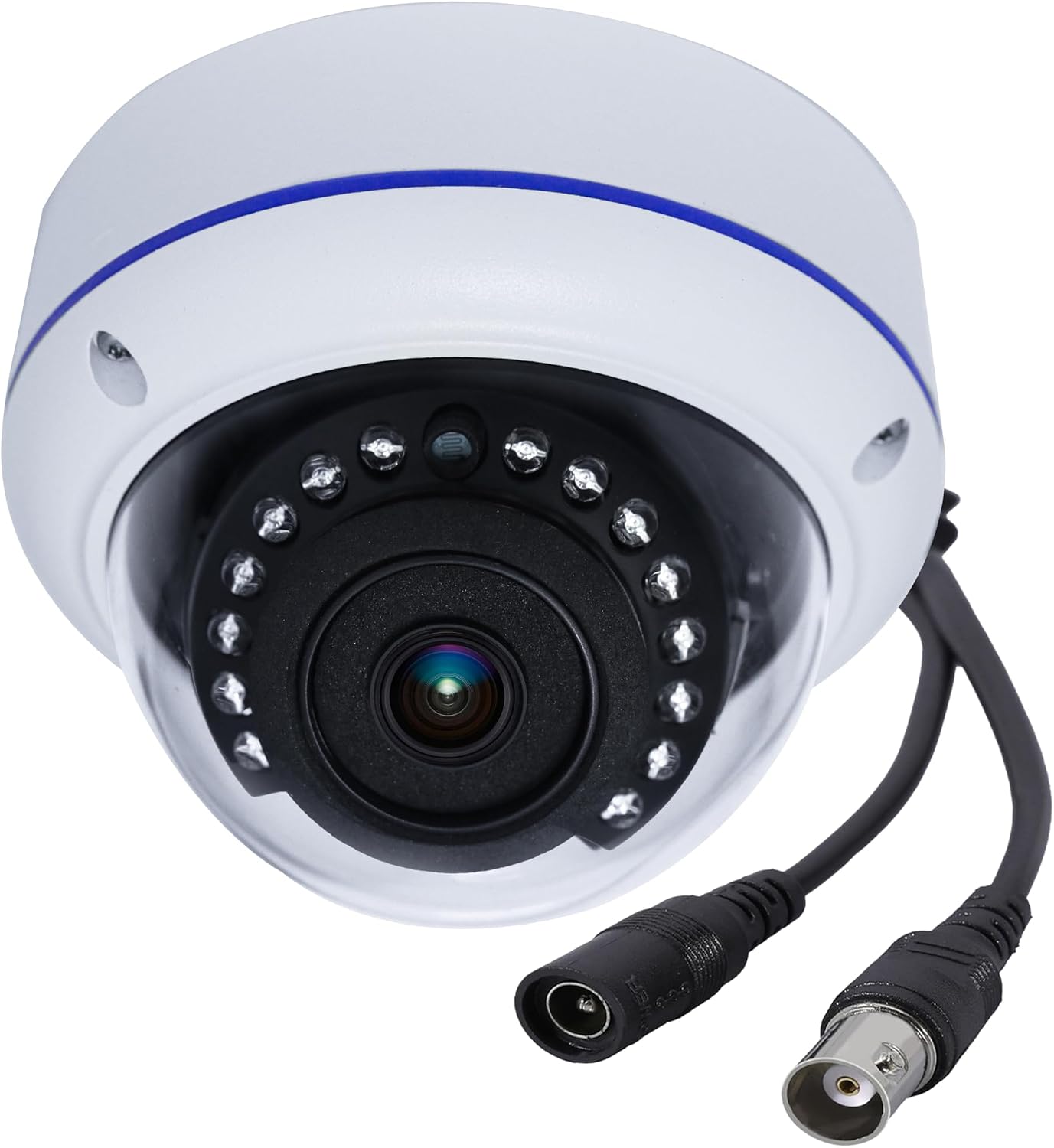
180 Degree Fisheye Dome
Sometimes you need to see an entire room, not just a corner of it. The fisheye dome does that. It's a 180-degree lens that sees everything in front of it, and I mounted one in my garage to cover the workbench and both cars. It catches everything. I walked across the garage at 2 AM to test it, and the footage showed me the whole time, from the moment I opened the door.
The catch is distortion. A fisheye lens bends the edges of the image, so faces at the edges look warped. You can correct it in the app, but then you lose the wide angle. It's a trade-off. For $34.99, it's a cheap way to cover a large area, but don't expect to ID someone at the edge of the frame.
The Wi-Fi version is easy to install, just screw it to the ceiling and plug it in. The app lets you de-warp the image, which helps, but it's still not as clear as a flat lens. One verified buyer noted in February: "Great view of the whole room, but faces at the edges are blurry." That's accurate. This is for someone who cares more about seeing that someone is there, not necessarily who it is.
Flaws but not dealbreakers: The distortion is real, and the image quality at the edges is soft. But for covering a garage, a workshop, or a large living room, nothing else at this price comes close. It's a tool for awareness, not identification.
Budget pick: 1080P 2MP 180 Degree Analog Bullet
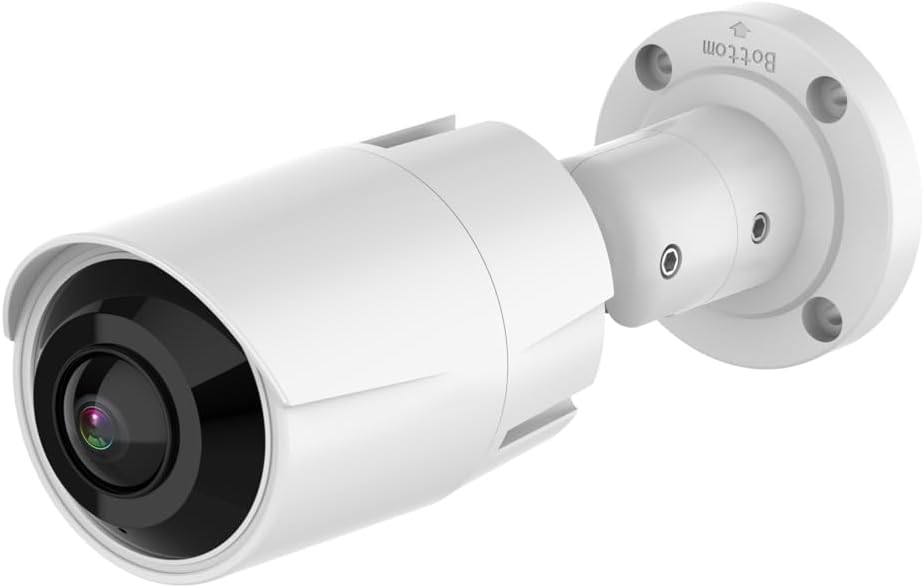
1080P 2MP 180 Degree Analog Bullet
This is the cheapest way to get a true 180-degree view. It's an analog camera, which means it uses coax cable instead of Ethernet, and it needs a DVR to record. That's a hassle, but if you already have an analog system, this is a drop-in upgrade that doubles your coverage.
The image is 1080p, so it's not as sharp as the 4K options, but the wide angle means you see more. I tested one on my fence line, and it covered the entire back yard, from the compost bin to the shed. The night vision is decent, black and white but clear enough to see a person at 20 feet.
At $36.99, it's a steal if you have the DVR. But if you're starting from scratch, the DVR adds $60 or more, and then you're better off with the Reolink. A buyer in January wrote: "Works great with my old DVR, wide view is perfect for my driveway." That's the use case.
Flaws but not dealbreakers: Analog is old tech. The resolution tops out at 1080p, and you can't access it from your phone without a complicated network setup. But for the price, it's the cheapest way to kill your blind spots.
Also worth your time: Tapo C101
The Tapo C101 is an indoor camera with a 110-degree FOV, which is plenty for a living room or a baby's nursery. At $15.96, it's the cheapest camera I've tested that I'd actually recommend. The image is 1080p, the app is the same Tapo app, and it has local storage and two-way audio.
I put one on my bookshelf to watch the front door while I'm at work. It's not a security camera in the way the outdoor ones are, but for $16, it's a great way to keep an eye on a room. The plastic build is chintzy, and the mount is flimsy, but it does the job.
Flaws but not dealbreakers: It's indoor only, so don't mount it under the eaves. And the FOV is narrower than the others here, so you won't cover a whole room from one corner. But for the price, it's a no-brainer for a first camera.
The competition
I tested a lot of cameras that didn't make the cut. The Wyze Cam v3 is unbeatable at $35, but its FOV is a standard 130 degrees, which is fine but not special. The Eufy cameras have great image quality, but they're expensive and the privacy concerns are real.
Ring is a subscription trap, and the police access thing is a hard no for me. Arlo's battery cameras die in cold weather, and the delay on Blink means you're recording after the person is gone.
The ZOSI dome is a solid budget option at $18.99, but it's a standard 100-degree dome, nothing special. It's a good camera for someone who needs to cover a single door and doesn't need wide angles. But if you're shopping for FOV, the cameras above are the ones that actually deliver.
Field of view is the difference between a camera that catches a face and a camera that catches a shoulder. Measure your driveway, count your blind spots, and buy the widest lens you can afford. Your future self, at 3:07 AM, will thank you.