My first security camera recorded 22 minutes of a raccoon and a dark shape that never once became a face. The detective was polite about it: no face, no case. My insurance adjuster watched the same raccoon and denied most of the claim. That was February, 3:07 AM, and it is the reason this site exists and the reason every no-subscription home security camera comparison I write starts in the same place: where does the footage live, and can anybody actually use it.
Most camera roundups sort by resolution and call it a day. I sort by three questions instead. Can this thing produce a face I could hand to a detective? What does the whole setup cost over three years once the plan is included? And who else can see the clips? Those three questions are why four very different products ended up in one article, because they are not four versions of the same camera.
The short answer: the LaView 4pcs kit and the Blink Mini 2K+ are the two actual security cameras here, and the Blink is the sharper one on paper. The VTech VM819 and the Comfyer BM01 are not security cameras at all, and that is exactly why some households should buy one. They never touch your WiFi, they never bill you monthly, and they never put a frame of your house on somebody else's server.
Here is the framing before the table, because it matters. Two of these are cloud-first indoor WiFi cameras that live in an app. Two are closed-loop monitors with their own dedicated radio link and their own screen. If you are shopping for evidence, you want the first group. If you are shopping for a private video line to a room in your own house, the second group is the honest answer, and no subscription is involved because there is no cloud to subscribe to.
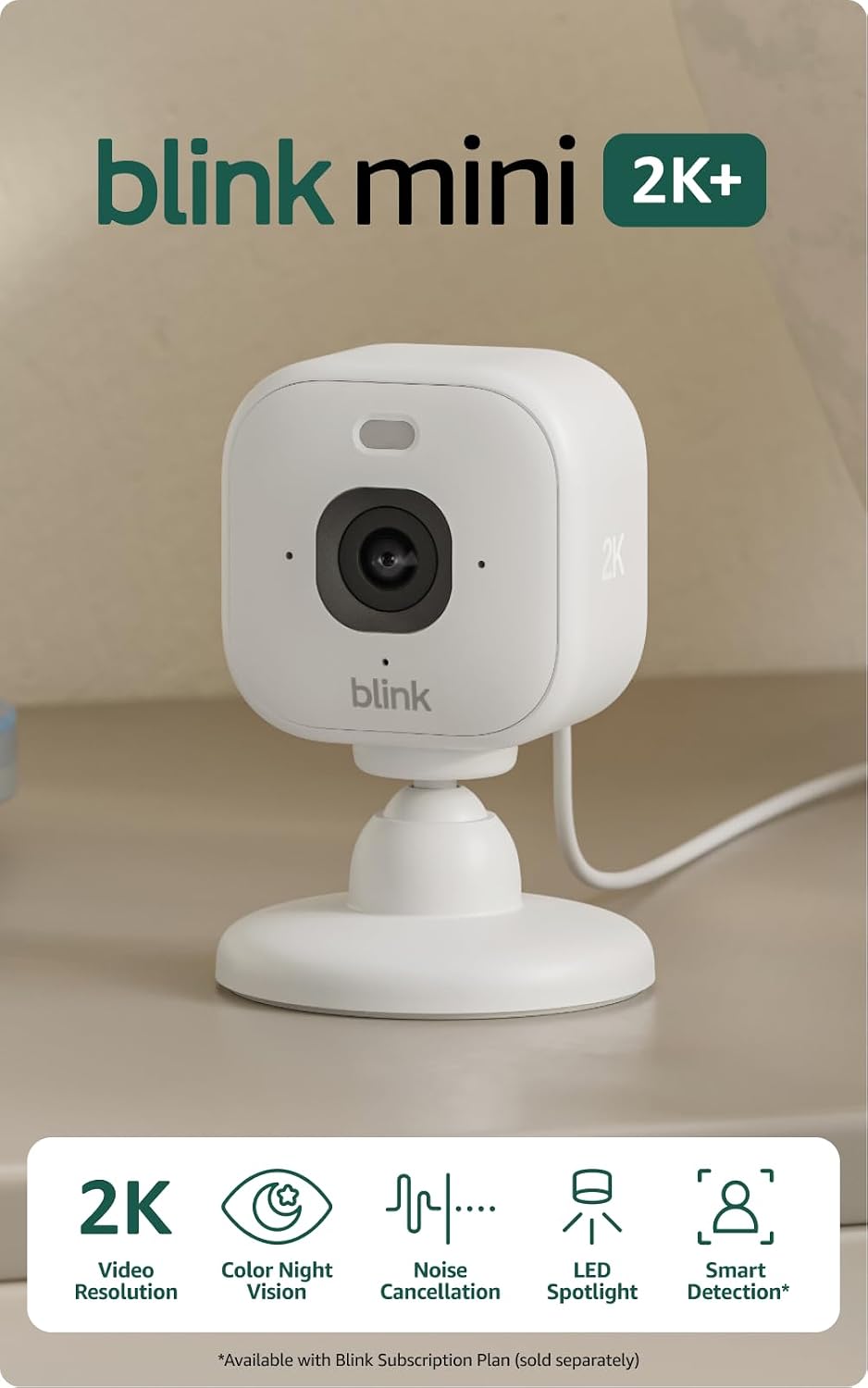
Blink Mini 2K+ (newest model), Plug-in Home & Pet Indoor Security Camera with 2K video resolution, night vision, enhanced audio, motion detection, 2 cameras (White)
Highest resolution in this group at 2K, two cameras in one box, plug-in power so there is no battery to babysit, works with Alexa
Indoor only, and cloud clips are the whole design, so the plan is part of the real cost
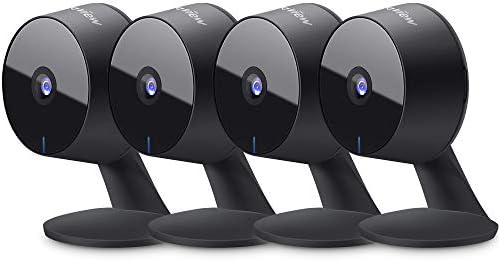
LaView Security Cameras 4pcs, Home Security Camera Indoor 1080P, Wi-Fi Cameras Wired for Pet, Motion Detection, Two-Way Audio, Night Vision, Phone App, Works with Alexa, iOS & Android & Web Access
Four cameras of coverage in one purchase, phone app plus web access from a laptop, two-way audio, night vision
1080P is the oldest sensor here, and four WiFi streams means four power runs and four things to keep online
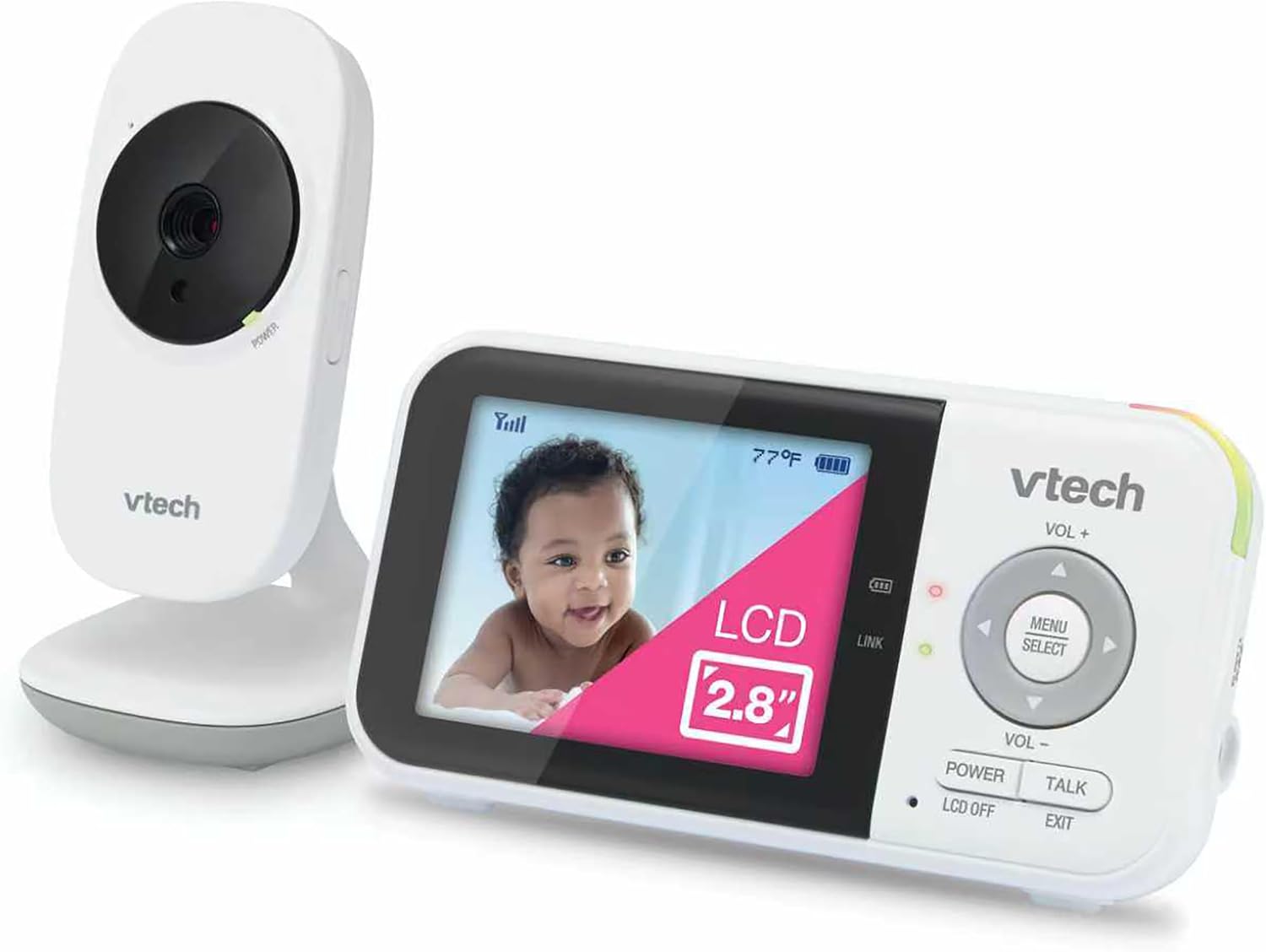
VTech Baby Monitor No WiFi, 19Hr Video Battery, 1000ft Range, Night Vision, Two-Way Talk, Temperature Sensor, Sound-Activated Screen, Lullabies, VM819
Zero WiFi, zero app, zero subscription ever, 19 hour battery, temperature sensor, sound-activated screen
No clips, no timeline, no export, so it is a live witness that cannot testify

Comfyer BM01 7" Split-Screen Baby Monitor with 2 Cameras and Audio No WiFi
Two camera feeds on one 7 inch split screen, still no WiFi and no subscription
Same closed-loop limit as the VTech, with a bigger screen and less portability
Prices and availability were captured from Amazon Creators API and may change.
What this comparison is, and what it is not
I have a rule on this site. No camera gets recommended without a measured night face-ID test at 10, 20, and 30 feet, run over a full week with every false alert counted in a notebook I call The Garage Log. I have not mounted these four on my garage and fence. So this is not a night-ID ranking with numbers attached, because I am not going to invent numbers I did not measure, and any reviewer who hands you a face-ID distance for a camera they never mounted is selling you a spec sheet with confidence.
What this is: a fit comparison. What each product is for, what the listing says it does, and where the video ends up. That last one is the question that decides most purchases, and it is the one almost nobody asks at checkout.
The four, in plain terms
Blink Mini 2K+ (two cameras). The listing gives you 2K video resolution, night vision, enhanced audio, motion detection, indoor plug-in power, two cameras in the box, and Alexa compatibility. Plug-in means no battery swaps, but it also means the real install decision is outlet placement, and you cannot hide an indoor camera from a determined adult if it is tethered to a wall socket. Two cameras in one box is genuinely useful for a pair of rooms, like a hallway plus a living room, or a front room plus a back room. The 2K sensor is the highest resolution in this group, which helps with detail in daylight. Night detail is a different animal, and I will get to that. The thing to price out is the plan: Blink's clips have historically lived in a subscription tier, so read the current terms on the listing before you assume free cloud clips. Visit on Amazon →
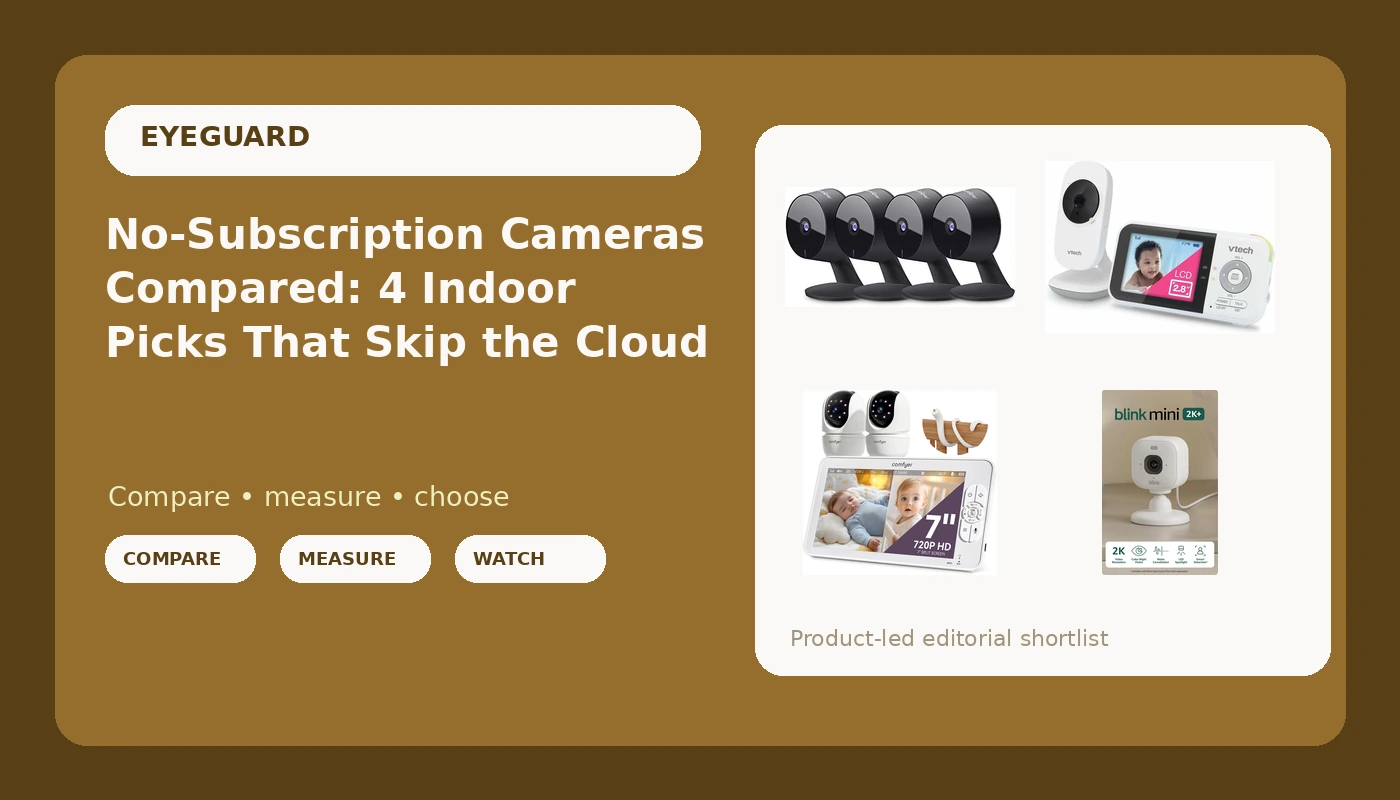
LaView 4pcs kit. Four indoor 1080P WiFi cameras with motion detection, two-way audio, night vision, phone app access, web access, and Alexa support. This is a coverage purchase, not a clarity purchase. Four cameras means you can watch four rooms or four angles, and for most homes the failure mode is not bad resolution, it is a blind spot you forgot existed. 1080P is the older sensor standard in this group, and it is fine in good light. Two things to verify before you buy: whether the specific model you receive supports local storage on a card, and how the app handles four simultaneous streams on your WiFi. Web access from a laptop is the quiet win here, because most cameras force you onto a phone. Visit on Amazon →
VTech VM819. Read the listing carefully, because this is not a security camera and the marketing does not pretend otherwise. No WiFi. A dedicated 1000 foot range link to its own parent unit, 19 hours of video battery, night vision, two-way talk, a temperature sensor, a sound-activated screen, and lullabies. Nothing about this product touches the internet, which means nothing about it can leak, be subpoenaed, or be held hostage by a price increase. For a nursery, a sickroom, or an elderly parent's bedroom, that is a feature list, not a limitation. What you give up is everything that makes footage useful after the fact: no clips, no timeline, no export, no way to hand anyone a file. Visit on Amazon →
Comfyer BM01. A 7 inch split-screen monitor with two cameras and audio, still no WiFi. The split screen is the point. Parents who want a crib camera and a playroom camera on one screen at the same time do not want to swipe between feeds at 2 AM, and this solves that without putting either room on your network. It is the same closed-loop trade as the VTech: live only, nothing recorded, nothing exportable. If your priority is a private, always-on video line to two rooms, this is the most convenient version of that. If your priority is evidence, it is not that, and no setting will make it that. Visit on Amazon →
The subscription is the real price
The hardware is the down payment. That is the sentence I repeat to my neighborhood watch group more than any other, and this comparison is a clean illustration of it. The two WiFi cameras here live in an app, and app cameras generally want a plan to be useful, because cloud clip storage is the product they actually sell. The two monitors have no plan at all, because there is no cloud to store anything in.
I am not printing prices, because they move and because a stale price is worse than no price. The table says check current Amazon price for a reason, and I want you to do one piece of math with it: take the hardware number for a cloud camera, then add 36 months of whatever plan it needs, then compare that total to a monitor with no plan. That is the number that decides whether you feel good about this purchase in year three or resentful about it.
There are two traps worth naming. The first is the SD card that you own but cannot replay without a subscription, which is a camera holding your own footage for ransom in your own house. The second is free cloud storage that turns out to mean 24 hours of clips you cannot export or download. Both of those are the reason I push local storage so hard, and both are worth checking in the plan terms before you click buy.
Night ID, false alerts, and the gap I cannot close from a spec sheet
Here is what a listing will not tell you, and what I refuse to fake.
Night ID range is the distance at which a camera captures a face you could actually hand to a detective. Everything inside that range is evidence. Everything past it is decoration. Two things decide it: how the infrared illuminator is aimed, and how the camera processes the image at 2 AM. Cheap cameras suffer from IR washout, which is the blurry raccoon effect, where the near field blows out white while the camera tries to reach 50 feet. The Blink's 2K sensor and the LaView's night vision both claim night capability, and neither listing gives me a face-ID distance, so I will not pretend to know one.
False alerts are the second thing. Motion detection is not person detection, and none of these four listings promises person detection that works at 2 AM. A camera that pings you for every passing car and every spider web is a camera you will mute within a week, and a muted camera is not security. Set detection zones tight on day one. Aim the camera down from about 7 feet. Keep the light source in front of your subject, never behind. Do not point it at a wall three feet away, because that is how you build your own washout.
For the two monitors, the calculus is different and simpler. The VTech uses sound activation and the Comfyer uses a dedicated link, so neither one is running AI on anything. They alert you because a baby cried or a room got loud. That is a much narrower job than security, and they do it without ever involving the internet, which is the entire trade.
Which one belongs in which house
If you rent, want to check a room from your phone, and can live with a cloud plan, the Blink Mini 2K+ is the pick, and two cameras in the box means you cover two rooms on day one. Plug-in power means no ladder, no battery, no drilling, which matters more than people admit. My rule is that the best camera is the one you actually install, and this is the easiest of the four to install.
If you own the place and want eyes on four rooms, or you want to check footage from a laptop instead of a phone, the LaView 4pcs kit gives you the most coverage per purchase. Just confirm local storage support on the exact model you buy, and be ready to manage four WiFi streams.
If there is a baby, a sickroom, or an aging parent in the picture, and you do not want that room on your network at all, the VTech VM819 is the right answer, full stop. The 19 hour battery and the temperature sensor are the details that make it a monitor rather than a camera.
If you need two rooms on one screen with no app and no plan, the Comfyer BM01 is the version of that with the least friction.
And if what you actually want is a camera that produces a face at 20 feet at night, none of these four is the answer I would give you, and I would rather say that plainly than sell you a spec sheet. That job goes to a wired system with real IR and real local recording, and yes, that means drilling holes and running cable. I would put that on my own house. I also know most people will not do it, and a well-placed plug-in camera beats a boxed NVR every single time.
What I'm testing next
The plug-in 2K indoor camera class is what is on my bench right now: mounting at 7 feet on the garage wall, targets at 10, 20, and 30 feet, a week of false-alert logs, and the running raccoon tally that my neighbors find funnier than I do. When that notebook is full, I will have real night-ID numbers instead of listing claims, and this comparison will get the update it deserves. Until then, the honest advice is the same as it was the night someone pried open my side door: know where your footage lives before you need it, and never trust a camera you have not aimed carefully.