At 3:07 on a Tuesday morning in February, someone pried open the side door of my garage and walked out with two bikes, a toolbox, and my late father's camping gear. The camera I had mounted the week before recorded 22 minutes of a blurry raccoon and a dark shape that never once became a face. The detective was polite about it: no face, no case. Insurance asked for the footage, watched the raccoon, and denied most of the claim. That night is why I have spent every month since comparing 2K security cameras on my own garage, my own fence, and my own hallway, logging results in a notebook I call The Garage Log.
So this is not a spec sheet roundup. This is the comparison I wish existed before I bought the camera that failed me. Four cameras, four genuinely different designs, and one question underneath all of them: if something happens at 3 a.m., would you hand this clip to a detective and expect them to find someone?
The camera I would mount first is the wired Tapo C246D, because wired power means it can watch continuously instead of waking up when something moves, and dual lenses plus pan and tilt cover more of a yard per mount. If you cannot run a cable, the COOAU solar 360 is the camera most people will actually get installed, and a camera on the wall beats a better camera in the box.
Here is how the four stack up.
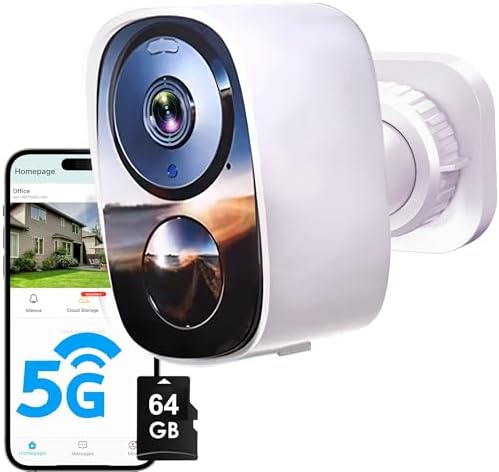
2026 Upgraded 2K Security Cameras Wireless Outdoor
Mounts with no wiring and no outlet, and the spotlight plus siren gives it a deterrent the other three lack. Advertised 1 to 6 months of battery means fewer ladder trips than a typical battery camera.
"Free cloud storage" needs its terms read before you trust it with evidence. Battery cameras record on motion, so a slow wake-up can clip the first second of an event. No pan or tilt, so you aim it once and live with that aim.
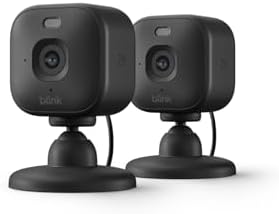
Blink Mini 2K+ (newest model) 2 cameras (Black)
Two cameras in one box is the simplest way to cover two indoor rooms at once. Plug-in power means no battery to think about, and 2K+ resolution with enhanced audio makes it a solid pet, kid, and entryway camera.
It is an indoor plug-in design, so it is not a garage or fence camera no matter how good the sensor is. It needs an outlet exactly where you want it. A two-camera kit also commits you to one app and one account for both rooms.

COOAU Solar Security Cameras Wireless Outdoor, 2K 360° Home Surveillance
Solar means no charging, no outlet, and no monthly ritual of pulling a camera down. One 360 pan and tilt mount can cover a yard that would otherwise take two or three fixed cameras. Install is genuinely a screwdriver job.
Seattle winters and shaded eaves are hard on a solar panel, so panel placement is the whole install. Pan and tilt on battery has to move to cover ground, which means it cannot watch two directions at once. Edge-of-frame detail suffers when the camera is mid-swing.
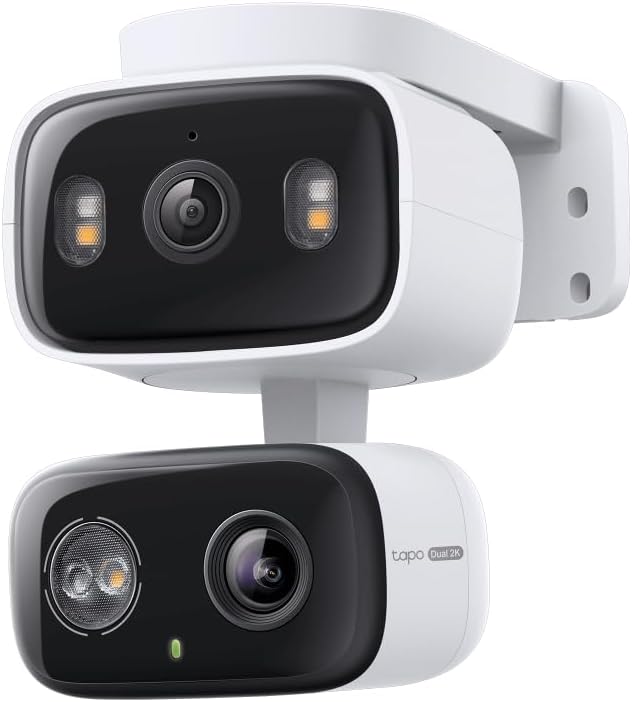
Tapo 2K Indoor/Outdoor Dual Lens Pan/Tilt Wired Security Camera, C246D
Wired power is the feature, not a limitation: it can watch continuously instead of waking on motion. Dual lens plus pan and tilt covers more of a yard per mount, and an indoor/outdoor rating means one camera can move from the garage wall to the hallway.
You are running a cable, and that is the entire reason people avoid wired cameras. It needs power where you mount it, which usually means a hole in the wall. It also asks the most commitment up front of the four.
Prices and availability were captured from Amazon Creators API and may change.
What I actually check before a camera earns a spot on my wall
Every camera I write about has to survive five questions, and none of them is about megapixels.
- Can it identify a face at 10, 20, and 30 feet at night, or does it only detect that something moved? A camera that detects motion is a notification machine. A camera that captures a face is evidence.
- How many false alerts does it produce in a full week, unedited? This is the number nobody publishes and the number that decides whether you keep notifications on.
- What does it cost over three years, subscription included? Hardware is the down payment. The plan is the price.
- Where does the footage live, and who else can see it, request it, or quietly delete it?
- Would I hand that clip to a detective and expect results?
The 2K resolution in all four of these cameras is a floor, not a selling point. Resolution is what lets a face survive a crop. What determines whether you get a usable crop is lighting, lens placement, and whether the camera was awake when it mattered.
Wired, battery, and solar are three different products
People compare these as if they were the same thing with different prices. They are not.
A wired camera like the Tapo C246D can run continuously. That matters more than any spec, because the first two seconds of a break-in are the two seconds a motion-triggered camera is most likely to miss. The cost is real: a cable, an outlet or a hole, and a Saturday.
A battery camera like the 2026 Upgraded 2K Wireless Outdoor trades that continuous watch for a five-minute install. You get the spotlight and the siren, which are genuine deterrents, and you get an advertised 1 to 6 months between charges, which depends entirely on how busy your street is. More alerts means more battery drain, and a camera on a low battery is a camera that misses things.
Solar, which is what the COOAU uses, is the compromise. No cable, no charging ritual, but the panel has to see sun. In Seattle that is not a small caveat. Mount it under a deep eave and you have invented a battery camera with extra steps.
The subscription is the real price
Every one of these cameras works out of the box in some form. Every one of them also has a paid tier that makes it substantially more useful, and the difference between the free tier and the paid tier is usually where the features you actually bought the camera for live.
So before you buy any of them, do the math I do: take the plan you would realistically need, multiply it by 36 months, and add the hardware. Then ask whether you would still buy it at that number. Most people would not, and that is the point. The camera is the down payment. The plan is the price.
This is also where "free cloud storage" earns a hard look. In my experience with cameras that advertise it, free usually means a short retention window and clips you cannot easily export. Retention you cannot export is not evidence. Read the terms before you count on it.
Where your footage lives matters more than resolution
My rule is simple: your footage should live in your house. Local storage on a card or a recorder means no monthly bill, and no one else's legal request can quietly make your clip disappear. That is not paranoia, that is the lesson from a garage door that got pried open while my footage sat on someone else's server.
The trade-off is that local storage is your job. Cards fail, cards fill up, and a card inside an outdoor camera is a card someone can steal along with the camera. If you go local, check the card monthly. Write it in your calendar the way you write down smoke detector batteries.
A reasonable compromise, and the one I actually run: local first, cloud as a backup, and only if the cloud plan is cheap enough that you would renew it without thinking. I broke my own rule after the robbery. I am not pretending otherwise.
What 2K does and does not tell you at night
2K tells you how much detail the sensor can capture in good light. It tells you almost nothing about night identification range, which is the number that actually matters.
The failure mode to watch for is IR washout. Cheap cameras blast infrared at full power to light up a driveway, and anything within about 15 feet gets blown out into a white smear. You get a beautifully lit fence and a face with no features. That is the blurry raccoon problem, and no resolution spec prevents it.
Spotlight cameras like the 2026 Upgraded 2K Wireless Outdoor solve it a different way: they turn on a light, which gives you color instead of infrared. That is genuinely useful, and it is also a notification to anyone standing there that they are on camera. Whether that is a deterrent or an invitation depends on your street.
Pan, tilt, and dual lens: coverage math
A fixed camera sees one cone. A pan and tilt camera like the COOAU covers a much wider arc from a single mount, which is why 360 coverage sounds like a bargain. The catch is that a motorized camera has to be pointing somewhere, and it cannot point everywhere at once. If it is swinging left, it is not watching right.
Dual lens designs like the Tapo C246D attack the same problem differently: two sensors watching two directions at the same time. For a garage corner where the door and the driveway both matter, that is a better answer than a single lens sweeping back and forth. Two simultaneous views beat one moving view almost every time.
The two-camera kit question
The Blink Mini 2K+ kit is the odd one out here, and it should be, because it is an indoor camera. Two cameras, plug-in power, 2K+ resolution, night vision, enhanced audio, and motion detection.
That is a very good package for two rooms inside the house: the hallway and the back door, or a nursery and a home office. What it is not is a garage camera. Indoor cameras behind a window at night mostly record reflections of your own living room, which is a mistake I have watched at least four neighbors make.
If your break-in risk is a garage or a side gate, do not buy indoor cameras and hope. Buy one outdoor camera and mount it properly.
Who each camera is actually for
- Wired Tapo C246D: the person who owns their home, can drill, and wants continuous recording plus two directions from one mount. This is my pick for most houses.
- COOAU solar 360: renters and anyone who refuses to run cable. Best when the mount point gets real sun.
- 2026 Upgraded 2K Wireless Outdoor: anyone who wants an outdoor camera on the wall this afternoon, and who likes the idea of a spotlight and siren doing some of the work.
- Blink Mini 2K+ two-camera kit: indoor coverage of two rooms, pets included, with the simplest possible install.
What I would skip
I would skip any camera that requires a subscription to replay footage stored on a card inside your own house. That is a business model, not a feature, and it turns hardware you paid for into a rental.
I would skip mounting a camera higher than about eight feet. Everyone does it because it feels safer, and everyone regrets it, because the higher the camera the more you are looking at the tops of heads. Faces are at six feet. Mount for faces.
And I would skip buying a camera without deciding where the footage lives first. Answer that question and the hardware decision mostly makes itself.
Bottom line
If you can run power, the wired Tapo C246D is the camera I would put on my own garage tomorrow, because continuous recording and two simultaneous views are what turn a clip into evidence. Visit on Amazon →
If you cannot run power, the COOAU solar 360 is the one that gets installed instead of argued about, provided the panel sees sun. Visit on Amazon →
The 2026 Upgraded 2K Wireless Outdoor is the right answer if you want a spotlight and a siren on the wall today, and the Blink Mini 2K+ kit is the right answer if the rooms you are worried about are inside the house.
Whatever you choose, mount it low, aim it at where a face would be, and check the card before you need it. The camera that is installed and aimed correctly beats the better camera still in the box. I learned that one the hard way, at 3:07 in the morning.