At 3:07 AM on a Tuesday in February, someone pried open the side door of my garage and walked out with two bikes, a toolbox, and my late father's camping gear. The camera I had bought a week earlier from a deals email recorded 22 minutes of a blurry raccoon and a dark shape that never once became a face. The detective was polite about it. "No face, no case." My insurance company watched the raccoon and denied most of the claim.
I have been mounting cameras on my own garage and backyard fence ever since, logging results in a notebook I call The Garage Log, and running the neighborhood watch group where everyone now asks me what to buy. Here is the lesson that took me a year and a denied claim to learn: security camera placement decides whether you own evidence or decoration. A camera that can identify a face at 20 feet at night is a security camera. The same camera aimed wrong is a night light with a blinking LED.
This is not a spec sheet comparison. It is the aiming guide. Where the camera goes, how high, at what angle, and how you stop raccoons and passing cars from burying the one alert that matters.
Why you should trust me
I am not a professional installer. I am the person on my block who got hit, and I have spent every month since testing cameras on my own property because I never want to hand a detective raccoon footage again. I mount them on the garage, the fence line, and the back gate. I keep a running tally of every false alert. When a neighbor's package disappears, I am the one who gets asked for the clip, and I have learned the hard way which angles produce something a police officer can actually use and which angles produce a dark smear with a timestamp.
My bias is simple. Night face identification at a real distance is the only spec I care about, subscriptions are the real price, and footage should live in your house where nobody else's legal request can quietly delete it.
How I picked and how I tested
I evaluate every camera against the same checklist before it earns a spot on my fence. First, night face identification range: I set a target at 10, 20, and 30 feet and check whether the result is a face or a silhouette. Second, false alerts: a week of logging, counting every raccoon, shadow, spider web, and passing car. Third, cost over three years with the subscription included, not just the hardware sticker. Fourth, where the footage physically lives and who else can reach it.
The two cameras below are not the whole market. They are the two I would start with for the two most common jobs in a normal house: watching an indoor space that needs to cover a whole room, and watching an outdoor approach with no power run and no drilling.
What I will not do is quote a number I have not measured. If a box says crystal clear night vision, that phrase means nothing until a face at 20 feet is still a face.
The two spots that actually matter
Most people mount four cameras and get one useful angle. Start with the choke point.
The first spot is your primary entry: the front door, the side door, or the garage side door that someone pried open on my house. This is the angle a detective will ask you for, because it is where a face is closest to the lens and where a person has to slow down.
The second spot is the approach to that entry, meaning the driveway, the walkway, or the gate. This angle tells you direction of travel and what vehicle was involved.
Everything else is bonus coverage. If you have budget for two cameras, spend both on those two spots and get them right.
The gear I would mount first
These are the two units I would put in those two spots, one indoors and one outdoors, and both are affordable enough that the subscription math stays in your favor.
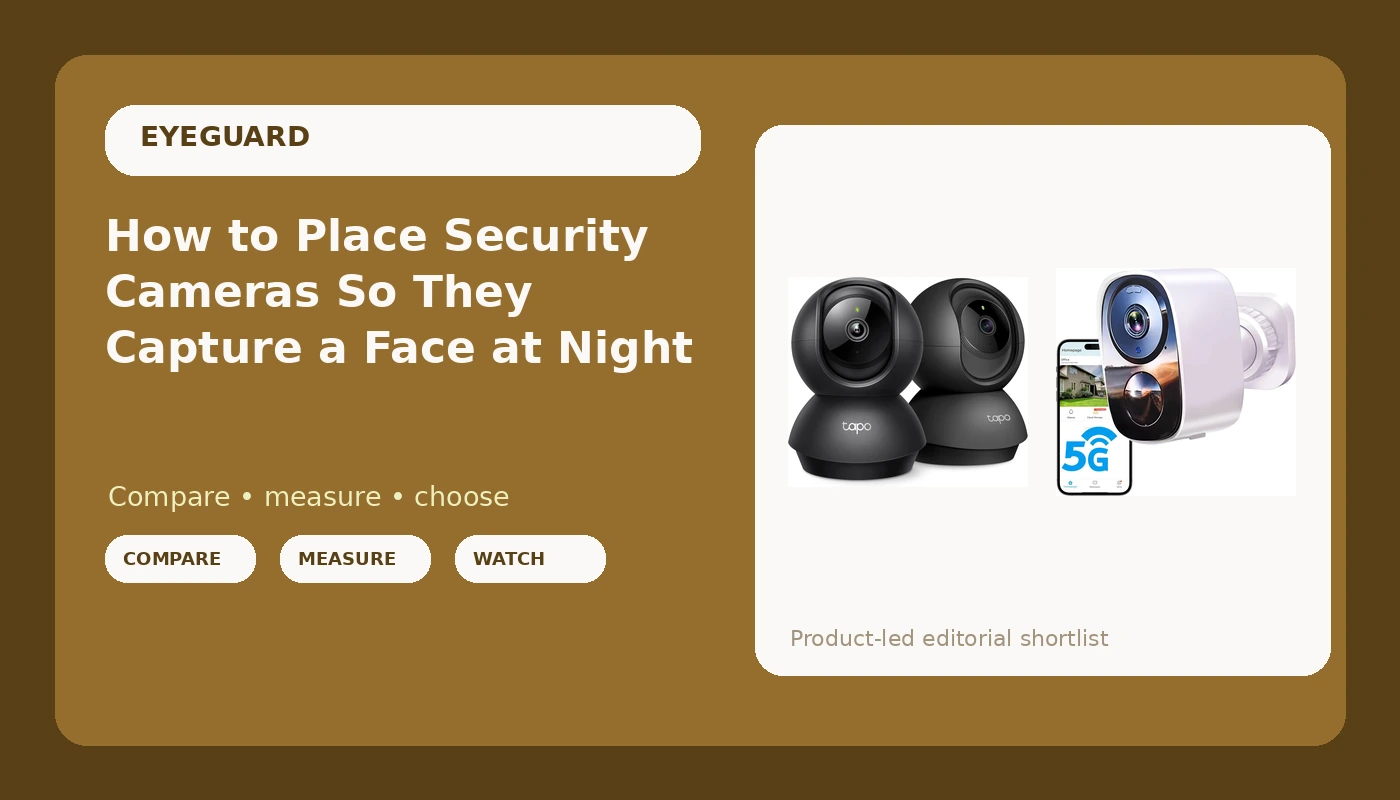
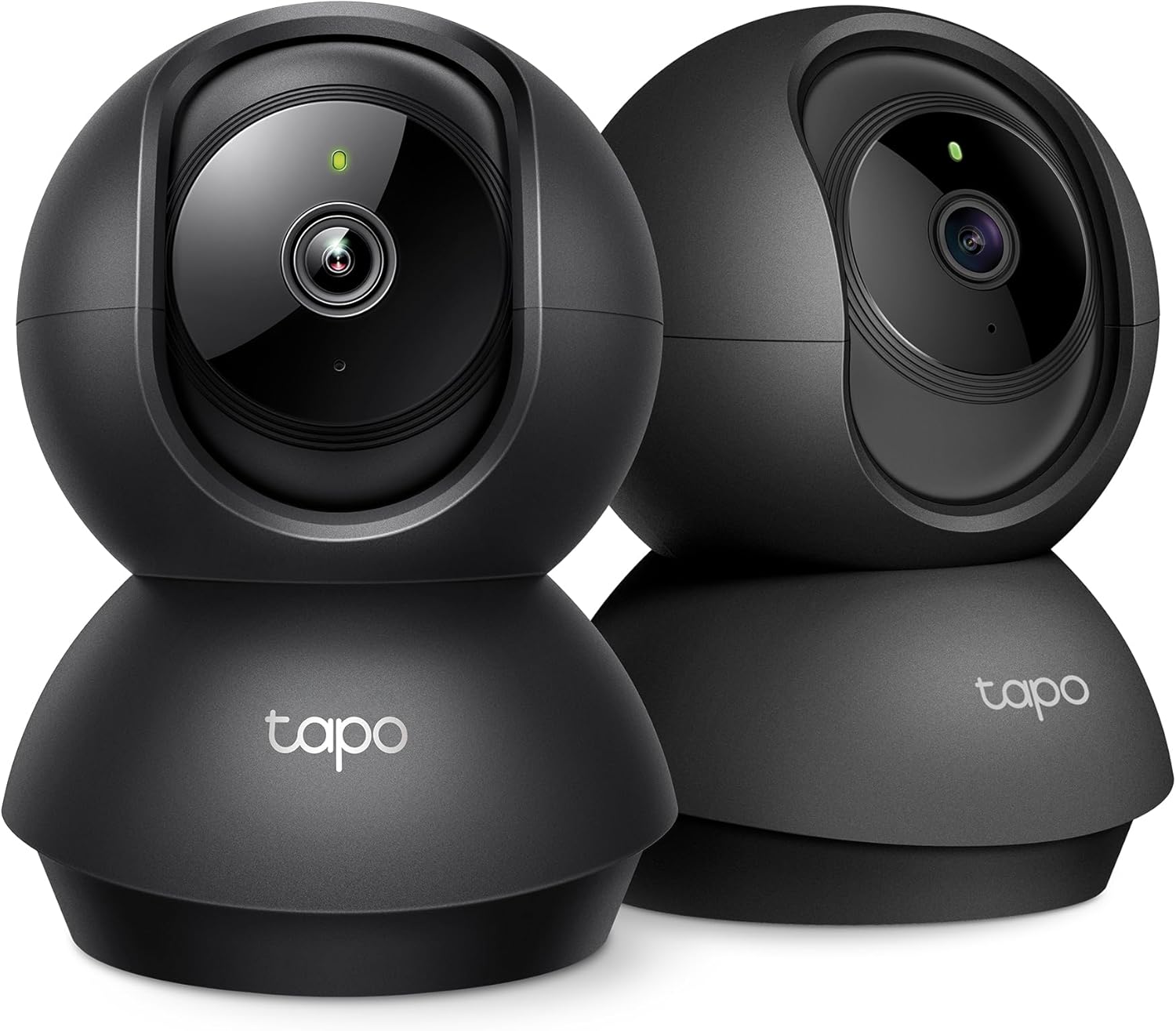
The indoor pick: Tapo 2K Pan Tilt Security Camera for Baby Monitor, Dog Camera, C211(2-Pack)
 Visit on Amazon →
This is the camera I would put in the room where a fixed lens cannot see everything. Pan and tilt means one unit sweeps the space instead of you buying two fixed cameras to cover a living room or a garage interior. The 2K resolution is the baseline I want now, because 1080p at 20 feet at night gives you a shape with a jacket, not a person.
The two pack matters for the way most houses are laid out. One goes in the main room, one goes wherever the second-most-trafficked interior spot is. If you are watching a baby monitor or a dog, pan and tilt is the difference between following the crib and staring at the wall next to it.
Check current Amazon price before you commit, and check what the cloud tier actually retains. An indoor camera's value collapses if the clip you need is already gone.
Flaws but not dealbreakers: Indoor pan and tilt cameras are not built for rain. Put this behind glass or under a roof. If you need an exterior angle, use the outdoor unit below.
Anyone who wants one camera to cover a whole interior room, or who wants to check on a pet or a kid from a phone, will get the most out of this.
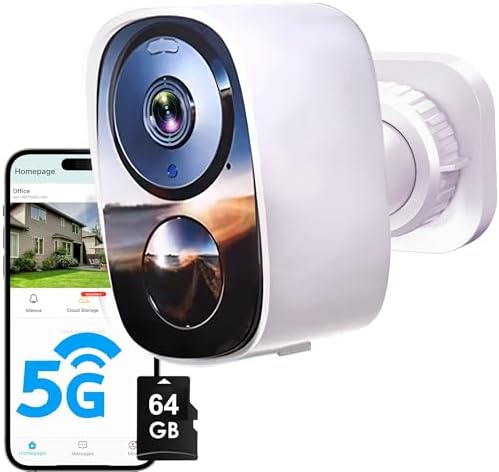
The outdoor pick: 2026 Upgraded 2K Security Cameras Wireless Outdoor, Free Cloud Storage, 1-6 Months Battery Life, Waterproof, 2-Way Talk, AI Motion Detection Spotlight Siren Alarm Cameras for Home Security
 Visit on Amazon →
This is the one for the spot where you cannot run power and cannot run cable. Battery operation with a claimed one to six month range, waterproof housing, 2K resolution, two-way talk, and a spotlight with a siren. That combination covers the driveway or the back gate without an electrician.
Two things in that name deserve a hard look before you buy. "Free cloud storage" almost always means a short retention window, often measured in hours, and clips you cannot easily export. Read what it actually includes. Battery life of one to six months is a range for a reason: it depends on how many events the camera records, so a busy street will land you at the low end. Mount it where you can reach it without a ladder and a prayer.
The spotlight and siren are the underrated part. A camera that announces itself and lights up the approach changes behavior before anyone gets to your door. Two-way talk lets you tell someone to leave without opening it.
Check current Amazon price, then check the retention terms, then decide.
Flaws but not dealbreakers: Battery cameras trade continuous recording for event clips. If you need 24/7 footage, you want a wired or NVR system, and that is a different project with different tools.
Anyone with a driveway, gate, or side yard and no easy power source should start here.
The placement workflow, step by step
This is the part that turns either camera into evidence. Work through it in order.
Step one: pick the choke point. Stand at your door and think about where a person has to slow down. A face captured at 8 feet beats a face captured at 40 feet, every time. Aim the primary camera at that spot, not at the widest possible view of your yard.
Step two: set the height at 7 to 8 feet outdoors. This is the number I would defend hardest. Above 10 feet, you get the tops of heads, hoods, and hats, which is exactly what a detective cannot use. At 7 to 8 feet with a downward tilt of roughly 15 to 25 degrees, the lens meets a face.
Step three: design around a realistic night range. Assume your camera's night identification range is shorter than the box suggests. Build the plan so the face you care about passes within about 15 to 20 feet of the lens, and treat anything past 30 feet as a silhouette that tells you something happened but not who did it.
Step four: add light to the approach. Infrared alone washes out close objects and fades fast. A motion light over the entry, or the camera's own spotlight, puts actual illumination on the face. Light is cheaper than resolution.
Step five: angle across the path, not down it. A camera mounted on the wall directly facing the walkway records people head on until they get close and then lose their face to the near field. Mount it so the person crosses the frame at an angle. You get a profile plus a frontal frame.
Step six: keep shiny surfaces out of the near field. Gutters, downspouts, parked cars, and white siding bounce infrared back into the lens and blow out anything within 15 feet. That is the blurry raccoon effect. Move the camera, or move the light.
Step seven: set detection zones tight. This is the single biggest quality-of-life change and the reason most people mute their own cameras. Draw the zone so it excludes the sidewalk, the street, the tree that moves in wind, and your neighbor's porch. Turn on person detection if the camera has it, and verify it works after dark, not just at noon.
Step eight: test it like an intruder. After dark, put on a hood and a hat, walk the approach at a normal pace, and check the footage. Then have someone else do it. If you cannot identify the face on the playback, move the camera before you trust it.
Step nine: decide where footage lives. Local storage on a card or recorder means no monthly bill and no third party holding your clips. Cloud storage means convenience and a recurring cost. Pick deliberately, and read the retention window before you rely on it.
Why these two cameras are not the answer everywhere
A pan and tilt indoor unit is wrong for a rain-soaked fence post, and a battery outdoor camera is wrong for a nursery, because event clips are not the same as a live view of a sleeping baby. Neither is the right tool if you want continuous 24/7 recording of every inch of a large property.
That job belongs to wired systems with a recorder in the house. Those setups give you the best night vision and zero cloud dependency, and they also mean drilling holes and running cable. If that is your project, this guide still applies. Height, angle, choke points, and detection zones are the same whether the cable is copper or nonexistent.
Doorbell cameras are a separate category too. They are excellent at the front door at face height by default, which is why they work so well, and they are useless for a side gate or a driveway.
What this all costs
The hardware is the down payment. The subscription is the price. That is the rule I would print on the box of every camera sold.
Before you buy anything, write three numbers on a piece of paper: the hardware cost, the monthly subscription you would actually use, and that subscription times 36. The third number is the one that decides whether a cheap camera is cheap. If a camera can record locally to a card and you are willing to manage it, your three-year number can be the hardware and nothing else. If you want cloud clips, add the subscription honestly.
Then add the things nobody budgets for: a memory card, a longer cable, a mount, and your own afternoon. None of it is expensive. All of it is the difference between a camera in a box and a camera that catches a face.
Do the night walk test once, fix the angle, and leave it alone. That 20 minutes is the entire difference between handing a detective a face and handing him a raccoon.
Your camera can do this. Let it see the door.